


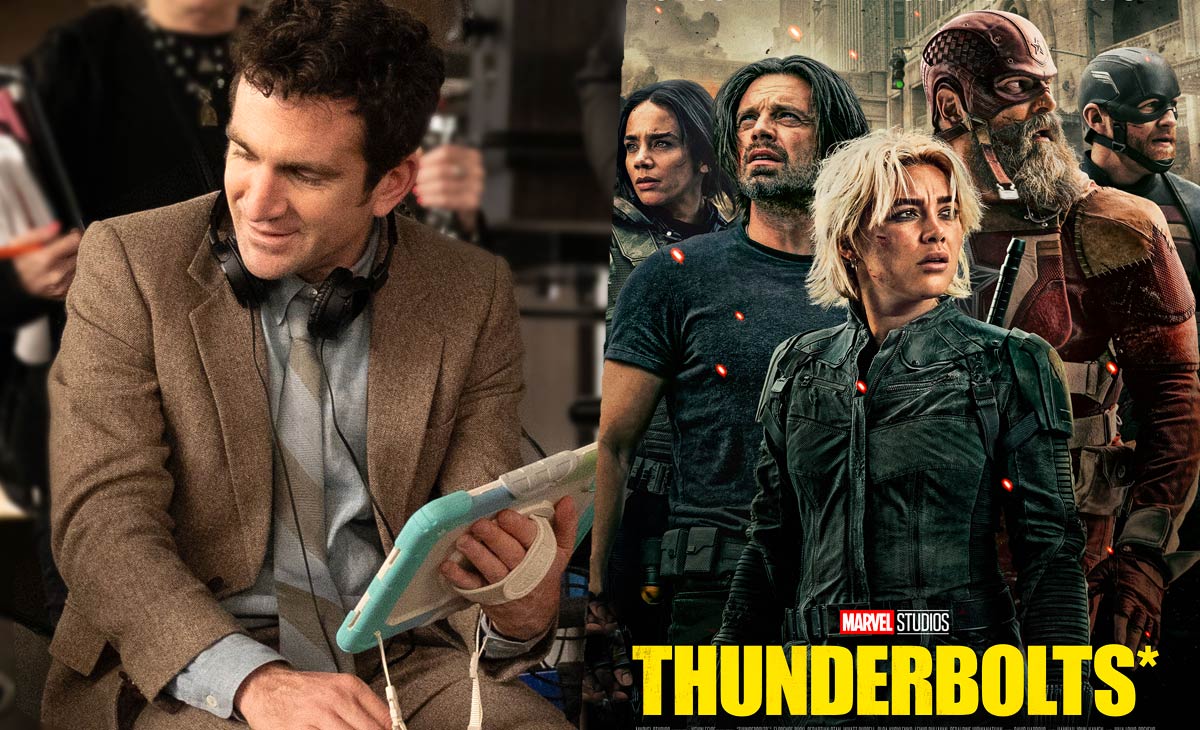
With “Thunderbolts*,” aka “The New Avengers,” director Jake Schreier delivers a darker, more character-driven entry into the Marvel Cinematic Universe—one that leans into the psychological weight carried by its antiheroes rather than relying solely on action spectacle. Centered around a team of morally complicated characters like Yelena Belova (Florence Pugh), Bucky Barnes (Sebastian Stan), John Walker (Wyatt Russell), and the enigmatic Sentry, aka Robert Reynolds (Lewis Pullman), the film explores themes of guilt, shame, and emotional isolation as these fractured individuals are forced to confront not only a world-ending threat but also their own inner demons.
READ MORE: Summer 2025 Movie Preview: 50 Films To Watch
At the story’s heart is a psychological battle with the Sentry—a godlike being whose immense power masks a deeper, more tragic mental struggle. Unlike traditional MCU entries where the villain is defeated with sheer force, “Thunderbolts*” pivots toward an introspective climax, using emotional resonance and shared trauma as its true battleground. In our conversation with Schreier, the director discusses building the film’s emotional core, working within Marvel’s fluid and ever-evolving creative process, and why a story about “broken people trying to fix each other” was the right move for this unlikely team-up film.
He also shares early thoughts on Marvel’s upcoming “X-Men” reboot, which he’s set to direct, calling the franchise “inherently interesting and complex material” with a wealth of internal conflict and emotional potential to explore—especially at the scale Marvel demands.
How did you shape the human, emotional depth of the film?
It started from the beginning with [screenwriters] Eric Pearson and Brian Chapek. Everyone involved put something of themselves into it. Lee Sung Jin from “Beef” came in and wrote several drafts, Joanna Calo (co-showrunner of “The Bear”) picked it up and stayed through the whole shoot. The actors contributed too. It’s not about one moment where it shifted—it was a process. My background in music videos taught me to prioritize the artist’s vision over my own, and I approached the film similarly. It should feel personal to everyone involved.
Was the emotional core, especially Yelena’s guilt, there from the start, or did it develop later?
Sentry, Bob Reynolds, was already part of the story when I came on. Once he’s your antagonist, the story shifts to something internal. You can’t beat him in a traditional way, so the resolution had to be emotional and psychological. Paul Jenkins always viewed Sentry as a parable for mental health, so the solution had to come from character connection—especially between Bob and Yelena, who mirrors his struggle. We had to develop Yelena’s backstory to make that connection meaningful.
The film’s theme seems to be shame. How did that take shape narratively?
Shame is definitely a big part of it, but it’s also what do you do with that shame? The characters start off isolated, but the arc is about finding connection with others who’ve been through similar things. It’s about becoming more than the sum of your parts—especially for someone like John Walker, who failed as a lone hero but might find redemption in a team.
You used a classic “hero’s journey” structure—was that deliberate?
Yes, and it’s about figuring out if you’re good enough. That theme always feels universal. The key is that they may not be the best team for a traditional superhero problem, but they are the only team that can solve this specific one.
Was it intentional to have such a subversive resolution—where you don’t defeat the antagonist physically?
Yes. We still gave it an action context—even if it’s fighting furniture—but it would feel reductive to suggest you can punch your trauma away. We wanted to use action to dramatize that without falling into cliché. It’s still a superhero movie, but we tried to explore action in a different emotional and psychological way.
Were there ever alternate versions with different characters?
No. By the time I came on, the lineup was set. Once Robert Reynolds was involved, the team had to be built around that idea and what they would face.
Was Taskmaster’s death something you discovered during shooting?
No, it came when we redeveloped the film during the scripting stage after the strike. At Marvel, the approach is: you’re never done. We finished the movie just two weeks before its release. Kevin Feige sets an ethos—never settle. You always look to improve. We did some additional photography, not much, but enough to make key improvements. Marvel calls it a “picture latch” instead of “picture lock” because the door’s never fully closed.
That process of continual revision—did it work for you?
Absolutely. You want collaborators who push you. Everyone—actors, crew—really contributed and stood up for the story. Coming from indie filmmaking, you often have limited resources and can’t improve much afterward. With Marvel, you have the tools and support to keep refining the film through editing, effects, or reshoots. If you use that properly, it’s a rare and powerful opportunity.
You’re doing “X-Men” next. What does that opportunity mean to you?
Without going into detail, I was a fan. X-Men has inherently complex, interesting characters and internal conflict. Being able to explore that material at the scale it deserves is a rare and exciting opportunity.
Marvel tends to reinvent familiar properties. Will this be a new take on “X-Men”?
Yes, I think that’s fair to say.
“Thunderbolts*” is now available for purchase or rent on digital platforms, DVD, and Blu-Ray via Disney.

Rodrigo Perez is the founder and editor-in-chief of The Playlist, which he launched in 2008. He has worked in entertainment journalism since 2000, including at MTV, and has written for SPIN, IndieWire, Pitchfork, Complex, Magnet, and various music, film, and entertainment publications over the past two decades.

