




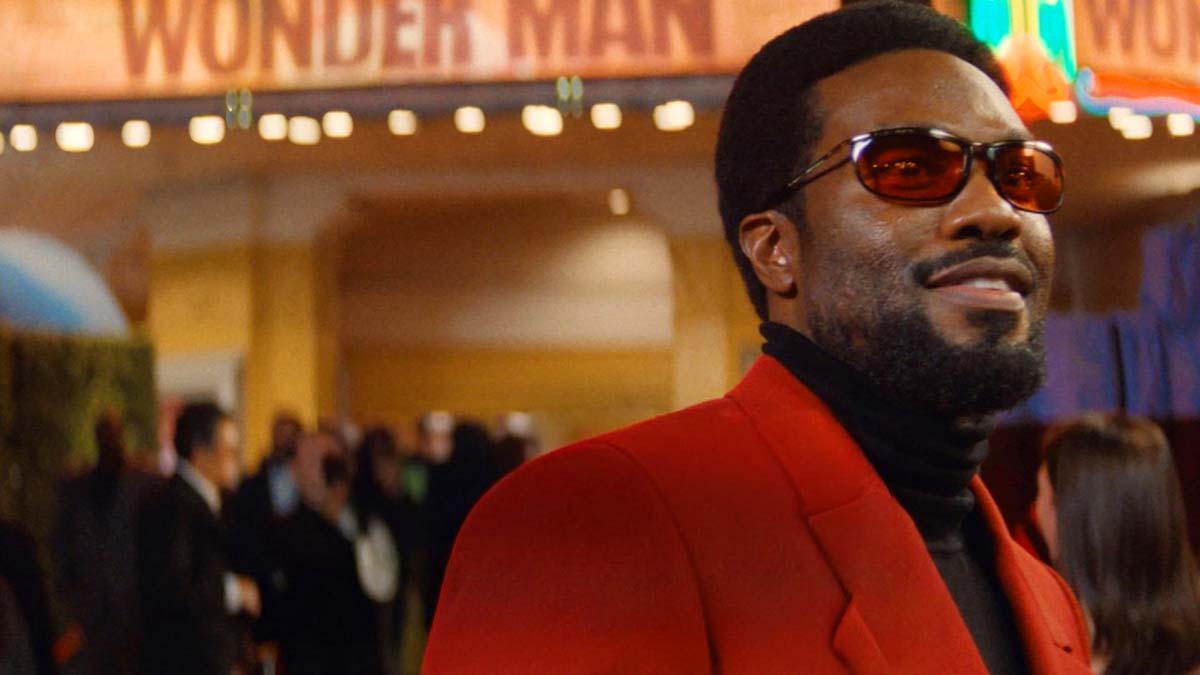
Marvel Television’s “Wonder Man” arrived in late January to strong reviews and an unusually warm reception for a project that barely resembled the studio’s usual four-quadrant template—even as early viewership indicators suggested it struggled to break through.
Starring Yahya Abdul-Mateen II as struggling actor Simon Williams and Ben Kingsley reprising the once-and-future faux villain Trevor Slattery, the eight-episode season played more like an offbeat Hollywood buddy comedy than a cape-and-VFX showcase (read our review). And if that sounded like an unconventional sell for Marvel, it turned out it both was and wasn’t—at least internally.
On a recent episode of The Watch podcast, Wonder Man” co-creator and showrunner Andrew Guest said the series had champions inside Marvel from the start, and those supporters weren’t trying to sand the edges off what made it strange. But he also described its path to release as a “rocky road.” Shot back in 2023, he admitted the show was nearly canceled several times before being fully backed again—a byproduct of Marvel Television’s 2023 course correction, as the company hit growing pains and rethought how it made television (something Marvel’s Brad Winderbaum recently alluded to).
Guest said the appeal, internally, was that the character and idea offered a kind of storytelling Marvel didn’t typically get to pursue—and that the earliest supporters weren’t pushing to genericize it.
“I think for many people at Marvel, this was a chance to do a kind of show and storytelling that they don’t normally get to do, and they were excited by that,” he explained. “And there was, as much as there was this rocky road for this show in terms of making it finally out into the public, there were champions from the beginning inside Marvel, they were excited. They were not saying there needs to be more action.”
There were early signs of both good and bad responses, both externally and internally. He pointed to early audience testing as a moment that could have triggered the typical “fix it in the writing” response—especially when viewers didn’t quite know what they were watching.
“Even when we tested the first two episodes, which we did in front of an audience, and it didn’t test all that great because a lot of people were confused by the show.”
Instead of a creative overhaul, Guest said the response was about recalibrating expectations.
“I was like, ‘Okay, now they’re going to say, “Let’s change it.”’ And they said, ‘No, we have to market this differently.’ So what’s amazing to me about this is the enthusiasm is one thing, but the realities of the period in which you were making the show were another.”
However, as Marvel’s Disney+ approach shifted midstream, Guest framed the experience as less about steering through turbulence than simply enduring it.
“There were several of those moments, as you know, where not only did I not think… So I didn’t have to navigate any of it,” he said. “I just held on and hoped and prayed, essentially. Like, it is hard to get anything made. And Hollywood in general isn’t going through a lot of change that’s really difficult to navigate.”
He described “Wonder Man” as a late arrival in the earlier, more expansive phase of Marvel’s Disney+ push—before the recalibration began —but admitted that, through all the changes, they nearly were deep-sixed several times.
“We, by the grace of somebody, story gods, we survived by the skin of our teeth several moments where we almost didn’t survive, I can tell you,” he revealed before explaining that part of the issue was when Wonder Man arrived.
“We were one of the last projects in the door of the previous iteration of the Marvel Disney Plus experiment, where they were saying yes to many things. And I think we can be anything,” he explained.
When the internal lens shifted toward Marvel contraction, Guest said the show wasn’t immune—and that it was briefly pulled from the board (something that was rumored a few years back).
READ MORE: Marvel’s ‘Wonder Man’ Series Could Be In Jeopardy Or Scrapped [Report]
The Watch host remarked that it’s an excellent position to be given the freedom to be any kind of show you want to be—until suddenly you can’t.
“Exactly,” Guest responded. “So there was a period during our writing where many things at Marvel were looked at sort of through a new critical lens of what we can pare down. And we were definitely one of those things that was taken off their board for a moment there, and the producers who were part of our project fought like hell to convince people this is something worth continuing with.”
The strikes, Guest said, put the series into a particularly brutal kind of limbo—half shot, and suddenly subject to fresh rounds of uncertainty.
“Then when the strikes happened, I think there were some more discussions about,’ Is this a thing we want to stick with?’” He admitted. “We shot exactly half of this project, which is kind of like the worst place to be. [But] they stuck with it.”
Even after completion, he described the wait as punishing, especially when he learned how far out the release would be (“Wonder Man” was initially set for 2025).
“It was really hard. I mean, I’ve been working on something else for the last year, but… It was not… That was a very difficult meeting when I learned that it wasn’t going to come out until 2026,” he said. “That sounded like a very long way away.”
At least Marvel wasn’t applying the usual connectivity pressure that some studios push. When asked about pressure to tie the series more overtly into the mainline Marvel narrative, Guest said that was never the mandate—separation was the concept from day one.
“No, there were not,” he explained. “This was from conception. We were never part of a larger story. And I think this goes to the fact that even four years ago, there was a desire internally at Marvel to separate some of this stuff. And an understanding that there was a lot of storytelling that was alienating to some people to try to stay on top of, and that maybe projects could exist separately.”
Fascinating talk. You can check out the full podcast below.