


Marvel’s Post-‘Endgame’ Math Is Brutal
The numbers are hard to ignore. In 2019, the MCU’s peak year, “Captain Marvel,” “Avengers: Endgame,” and “Spider-Man: Far From Home” combined for about $5.064 billion worldwide. Domestically, those three films made roughly $1.676 billion. Internationally, they made about $3.387 billion. The average MCU movie that year made about $1.688 billion worldwide and about $1.129 billion internationally.
That was the height of the Marvel machine: global, frictionless, and seemingly inexhaustible. “Endgame” was not just a hit; it was a cultural finish line. It turned a decade of serialized investment into a worldwide box office ritual. It also marked the end of an era that the industry has spent years trying, and mostly failing, to recreate.
Compare that to Marvel’s 2025 theatrical slate: “Captain America: Brave New World,” “Thunderbolts*,” and “The Fantastic Four: First Steps.” Those three films combined for about $1.319 billion worldwide. Domestically, they made about $665.1 million. Internationally, about $654.3 million.
That is a 73.9% worldwide decline from 2019 to 2025. Domestically, the drop is about 60.3%. Internationally, it is about 80.7%.
The international number is the killer. In 2019, the average MCU film made about $1.129 billion overseas. In 2025, the average international gross was about $218.1 million. That means 2025 MCU movies were averaging less than one-fifth of what Marvel’s 2019 movies were making internationally.
A broader post-“Endgame” comparison is a little more forgiving, but not much. From 2021 through 2025, the average MCU movie made about $706.9 million worldwide, down from about $1.688 billion in 2019. Those post-“Endgame” numbers are still strong by almost any normal studio standard. But the reality is, for Marvel, they represent a 58.1% decline per film. Domestically, the post-2019 MCU average is about $325.4 million, down from about $558.9 million in 2019, a 41.8% decline. Internationally, the average has fallen from about $1.129 billion to about $381.5 million, a 66.2% decline per film.
Yes, COVID Changed The Game. The Pattern Is Still Worse.
Yes, the pandemic changed everything. Any honest, good-faith comparison between 2019 and the post-“Endgame” era must account for COVID-19, which shut down theaters and rewired moviegoing habits for years; the streaming glut, which trained audiences to wait for home viewing and turned too much franchise storytelling into disposable content; and the loss of China as a reliable box-office engine, especially for superhero films that once counted on massive overseas grosses to push them into event-movie territory.
Those factors depressed the entire theatrical marketplace, not just Marvel and DC. They lowered the ceiling, changed audience behavior, and made pre-pandemic comparisons inherently imperfect. China was once a massive backstop for Hollywood superhero movies, particularly Marvel. The pandemic-era gap in Chinese releases hurt the genre’s global ceiling, and even after some Hollywood titles returned to China, the market was no longer the booster it had been during the 2010s. Russia also disappeared as a meaningful market. Meanwhile, Disney+ and the broader streaming boom blurred the difference between “event movie” and “content,” especially for Marvel, which spent years inadvertently expanding its cinematic universe into homework-heavy television.
So, no one has to pretend the decline is only about superhero fatigue. COVID, China, and streaming changed the marketplace, but they no longer explain the whole problem.
The pandemic, streaming, and the erosion of China lowered expectations across Hollywood. But they do not explain why the superhero genre, once the most reliable theatrical vehicle on the planet, has struggled so badly to regain its old floor. The box office is recovering. Audiences are still showing up for the right movies: family films, horror, nostalgia plays, filmmaker-driven spectacle, and movies with a c clear theatrical hook are working. Low-budget horror is overperforming, legacy brands can still break through and theaters are not empty. Yet, it seems like audiences have become skeptical and don’t treat every superhero movie as a must-see by default.
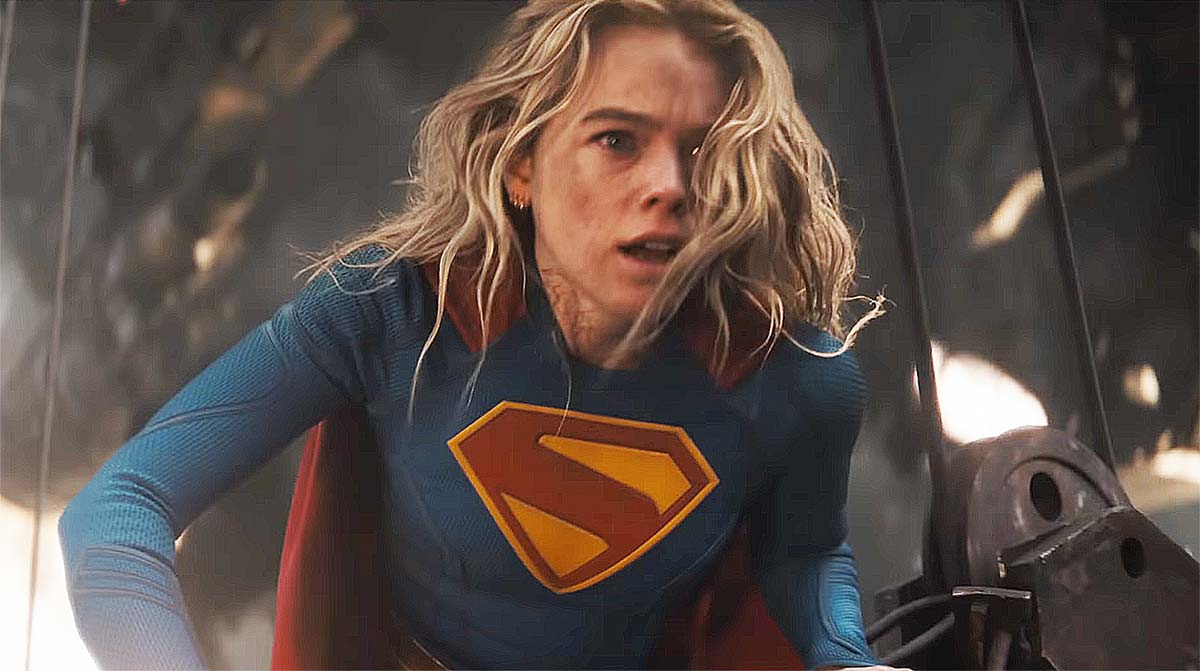
“Supergirl” sits squarely inside that new reality. Its roughly $37 million domestic opening and $68 million worldwide launch cannot be blamed solely on China. It cannot be blamed on COVID alone. It cannot be blamed on streaming alone. Those forces created the harsher climate, but the movie still had to sell itself inside that climate. And it didn’t.
The Post-Recovery Pattern Is Harder To Explain Away
Since “Endgame,” Marvel has still produced two undeniable mega-hits: “Spider-Man: No Way Home” and “Deadpool & Wolverine.” Those movies made $1.921 billion and $1.338 billion worldwide, respectively. But the broader middle has weakened. “Black Widow,” “Shang-Chi And The Legend Of The Ten Rings,” and “Eternals” all came with major pandemic-era caveats—reduced moviegoing, no China, and, in the case of “Black Widow,” a compromised day-and-date Disney+ release. Those films should not be treated as clear evidence of decline.
The post-recovery picture is harder to dismiss. Since 2023, Marvel has had one true mega-hit, “Deadpool & Wolverine,” against a string of underwhelming or problem titles: “Ant-Man And The Wasp: Quantumania,” “The Marvels,” “Captain America: Brave New World,” “Thunderbolts*,” and “The Fantastic Four: First Steps.” “Guardians Of The Galaxy Vol. 3” did well, but that was a finale to one of the MCU’s most beloved sub-franchises, not proof that the middle of the machine is healthy. The pattern is clear. The exceptions are still huge. The floor is lower.
DC’s own recent history is even uglier. “Black Adam” underperformed in 2022, and the following year was a bloodbath: “Shazam! Fury Of The Gods,” “The Flash,” “Blue Beetle,” and “Aquaman And The Lost Kingdom” all disappointed or collapsed outright, followed by the disastrous “Joker: Folie À Deux” flop in 2024. There are caveats there too, especially because audiences knew much of that universe was already being cleared out before Gunn and Safran’s reboot. But that is also what makes “Supergirl” so damaging. This was not supposed to be another lame-duck casualty. It was supposed to prove that the new DCU had escaped the old pattern, not reinforced it.
Widen the overall lens to Sony, and the ratio becomes harsher still. “Morbius,” “Madame Web,” and “Kraven The Hunter” all tried to mine the Spider-Man-adjacent corners of the Marvel brand and instead became commercial disappointments, cultural punchlines, or both. By the time “Supergirl” arrived, the warning signs were not subtle: audiences were still showing up for the biggest icons and true event plays, but the automatic market for every adjacent superhero property had badly receded.
Maybe There Isn’t Room For Two Superhero Universes Anymore
That leaves DC with a harsher question than whether “Supergirl” was marketed correctly, whether the script was far from great—Ana Nogueira, consider this an official warning—or whether one film missed the mark. The bigger problem may be capacity. As of today, in the year of our lord, the evidence is getting hard to ignore: there may not be enough audience appetite to sustain two sprawling, interconnected superhero cinematic universes at the same time.
Marvel is already eating up most of the oxygen left in the room, and even Marvel is arguably starting to wheeze. The Avengers and Spider-Man can still create eventized, must-see appointment viewing, and “Deadpool & Wolverine” sold itself as a once-in-a-cycle collision of stars, nostalgia, irreverence, and fan service—even if no one is going to mistake it for a classic just because it made a mountain of money. But everything underneath that tier is getting weaker. DC is not entering a wide-open marketplace. It is trying to build a second empire in a territory Marvel already strip-mined.
That makes “Supergirl” especially dangerous. The film was meant to prove that the new DCU had legs beyond “Superman,” and that audiences were willing to follow Gunn and Safran into stranger, more cosmic, second-tier corners of the universe. Instead, it suggests DC may still be stuck with the same old problem: Batman and Superman can travel, true event plays might break through, but the connective tissue of a cinematic universe is now much harder to sell.
Gunn’s instincts make that question even more worrisome. His DC already has the feeling of a personal toy box stocked with oddball characters, deep-cut monsters, and weird little side doors that may delight him more than the audience. “Clayface” is being sold as a low-budget horror swing, which is smart on paper, but it is still a third-tier Batman-adjacent movie that could split the difference and alienate both crowds: too weird for four-quadrant superhero audiences, too franchise-coded for horror audiences. “Lanterns” sounds great as a prestige sci-fi crime series, but it has already taken visual criticism from DC fans. And somehow, somewhere, someone looked at this fragile relaunch and decided a Jimmy Olsen/Gorilla Grodd project was the next obvious move.
That kind of gamble made sense when Marvel was operating from a position of overwhelming strength. In 2014, “Guardians Of The Galaxy” turned a D-list cosmic team into a blockbuster because Marvel had already earned the benefit of the doubt and because the cinematic-universe model still felt fresh. DC does not have that cushion. It has barely proved this new universe works beyond Superman, and Gunn and Safran already seem to be playing from an old Kevin Feige rulebook: trust the brand, go weird, build outward, assume the audience will follow. But the audience has changed, the brand has not earned that trust yet, and Marvel’s own recent failures have already shown what happens when studios mistake universe-building for demand.
Average Superhero Movies Don’t Cut It Anymore
That may be the hardest lesson for DC to absorb. A connected universe used to be the promise. Now it can sound like a warning label. Audiences have spent nearly two decades watching superhero movies multiply, mutate, cross over, reset, tease the next thing, and ask for more patience. Merely acceptable no longer cuts through that kind of exhaustion.
That is where “Supergirl” failed most clearly. It didn’t need better marketing or a softer landing. It needed to be a better movie: sharper, stranger, more emotionally compelling, more visually distinct, and more urgent in its reason for existing. In 2011, 2014, or even 2018, an average superhero movie could still ride the larger wave. In 2026, “average” looks like homework, “fine” looks skippable, and “OK” looks like something to catch on streaming at best.
That is also where Shawn Robbins’ distinction in Variety feels useful. Audiences may not be tired of superheroes in the abstract so much as they are tired of the same superhero movie being repackaged with new costumes, new credits scenes, and new promises of future relevance. The problem is not the cape; it’s that the cape is doing all the work with little to no help.
The economics make that problem even harsher. If a studio spends $150 million to $200 million on a superhero film, then another $100 million-plus on selling it, the movie cannot feel optional. It has to feel essential. “Supergirl” never did. That is why the reported $40 million production budget for “Clayface”—already being treated by some fans as the “see, it’ll be fine” safety argument—suddenly looks less like an experiment and more like a survival tactic. If DC wants to explore lesser-known or less commercially proven characters, the budgets have to match the risk.
And maybe that is where the genre is headed: not away from superheroes entirely, but away from automatic scale. Smaller budgets, sharper concepts, fewer assumptions. More films that justify themselves as movies first and franchise extensions second. If “Clayface” works, it probably won’t be because audiences are desperate for another corner of the DCU. It will be because a low-budget horror movie built around a tragic shapeshifting monster sounds like an actual movie.
That is the superhero recession: not extinction, but selectivity.
“Supergirl” matters because it arrived at the exact moment when the entire superhero business model is being tested again. DC needs this universe to work because it is trying to justify another long-term reboot. Marvel needs its next wave to work because its old dominance has clearly diminished. The problem is that audiences may no longer have the room, patience, or enthusiasm to sustain both at anything like their former scale.
So yes, “Supergirl” is a DC problem. But it is also a Marvel problem, a Hollywood problem, a superhero problem. The sky may not be falling… yet. But if this were an old-school superhero movie, this is the moment when the ceiling reveals the spikes, starts descending on our heroes, and nobody has figured out the exit strategy.

Rodrigo Perez is the founder and editor-in-chief of The Playlist, which he launched in 2008. He has worked in entertainment journalism since 2000, including at MTV, and has written for SPIN, IndieWire, Pitchfork, Complex, Magnet, and various music, film, and entertainment publications over the past two decades.

