


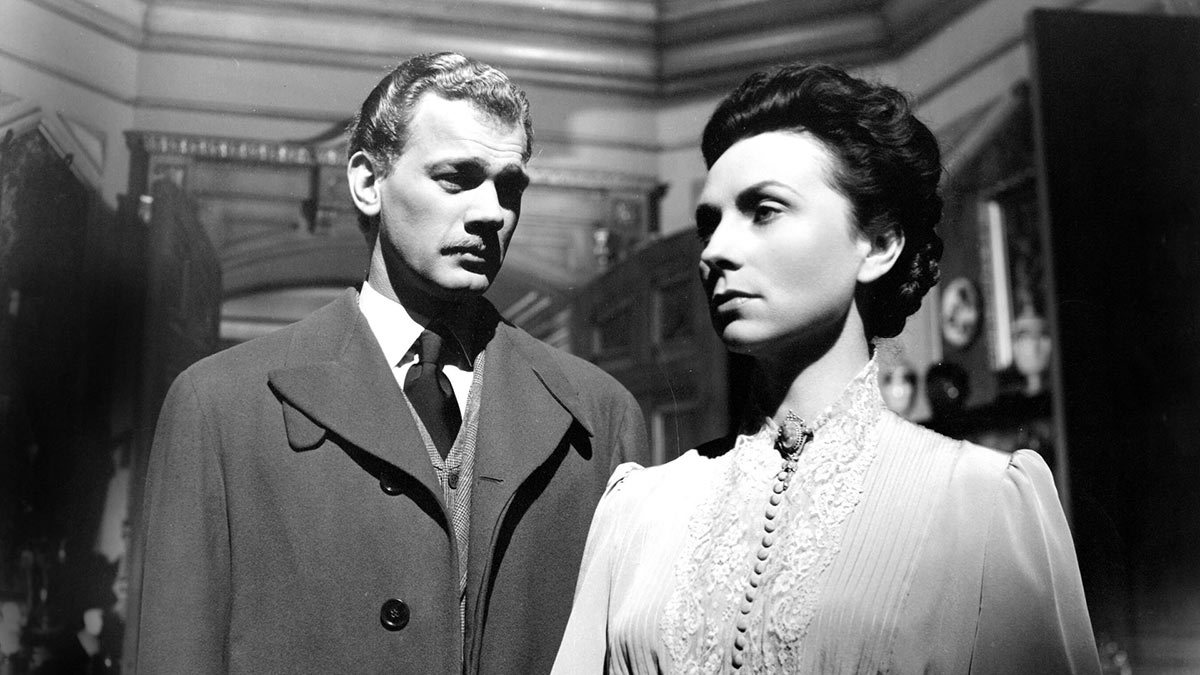
Among the holy grails of lost cinema—sitting right alongside the eight-hour cut of Erich von Stroheim’s 1924 silent epic “Greed”—is Orson Welles’ 1942 family melodrama “The Magnificent Ambersons.” Famously, or infamously, RKO Pictures butchered the film, locked Welles out of the editing room, hacked nearly an hour out of his original cut, and slapped on a studio-mandated ending.
The drama starred Joseph Cotten, Dolores Costello, and Tim Holt, with Agnes Moorehead delivering one of her most acclaimed performances.
READ MORE: The Essentials: The Directorial Films Of Orson Welles
The damage was devastating. Welles was heartbroken, and many argue this was the breaking point of his career, one from which he never truly recovered artistically—even if several remarkable works still followed.
And now, in an announcement that feels both inevitable and sacrilegious, Showrunner—a tech platform calling itself the “Netflix of AI”—plans to use artificial intelligence to reconstruct 43 minutes of excised footage from Welles’ original version. The company’s CEO, Edward Saatchi, whose firm is Amazon-backed, revealed the plan Friday morning in an interview with CNBC. Describing “The Magnificent Ambersons” as a “ruined masterpiece,” Saatchi pitched the project as a way to bring the film “back to life.”
“They destroyed ‘Ambersons,’ and it destroyed me,” Welles once said. His initial 132-minute cut, mournful and elegiac, achieved mythic status after the mutilated 88-minute version was released.
For decades, cinephiles chased the missing reels. The lost footage has been regarded as the ultimate holy grail, with writer David Kamp’s exhaustive 2010 Vanity Fair article chronicling the futile global search—including a legendary hunt in Brazil—remaining essential reading for any serious film student.
The story of “The Magnificent Ambersons” itself mirrors the tragedy. It charts the declining fortunes of a wealthy Midwestern family as the automobile age reshapes American society. RKO not only cut down the runtime but also reshot and replaced Welles’ somber ending with something far more upbeat, much to his dismay.
The loss haunted Welles for decades. In conversations with Peter Bogdanovich between 1969 and 1975—later collected in “This Is Orson Welles”—the director confessed he had once tried to restage the ending with surviving cast members, but the opportunity slipped away.
And of course, the legend of “Ambersons” isn’t just about lost reels—it’s about the birth of Hollywood’s fear of auteurs. After the critical and commercial backlash to “Citizen Kane,” RKO executives panicked, desperate to assert control over their young prodigy. Studio politics, meddling producers, and test screenings gone awry sealed Welles’ fate and cemented the movie as one of cinema’s greatest “what ifs.” It stands as a cautionary tale, not just about a ruined masterpiece, but about how Hollywood’s machinery has historically feared and broken filmmakers who dared to challenge its formulas.
Sacrilege or not, Showrunner’s project leans on the fact that Welles’ complete script survives. And while purists will balk, it’s almost guaranteed that hardcore cinephiles won’t be able to resist watching this AI-generated cut, if only to satisfy their own nagging curiosity about what might have been.

Rodrigo Perez is the founder and editor-in-chief of The Playlist, which he launched in 2008. He has worked in entertainment journalism since 2000, including at MTV, and has written for SPIN, IndieWire, Pitchfork, Complex, Magnet, and various music, film, and entertainment publications over the past two decades.
- Rodrigo Perez
- Rodrigo Perez
- Rodrigo Perez
- Rodrigo Perez
- Rodrigo Perez
- Rodrigo Perez
- Rodrigo Perez
- Rodrigo Perez
- Rodrigo Perez
- Rodrigo Perez

