


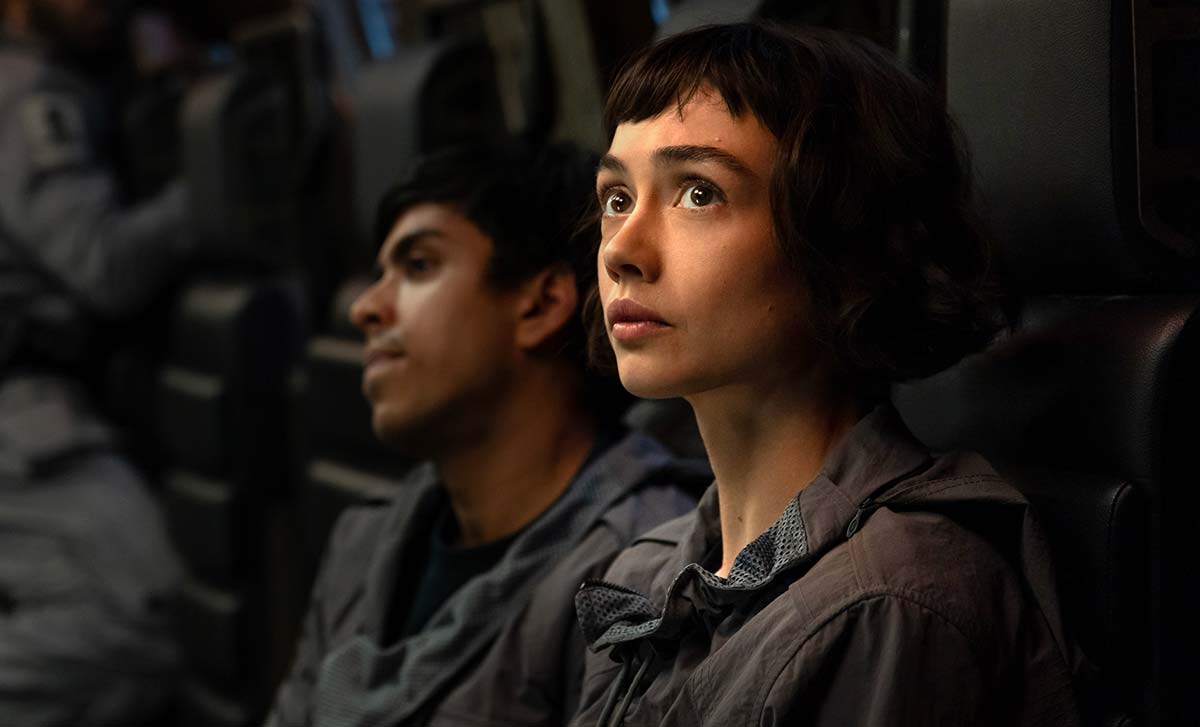
When FX’s “Alien: Earth” debuted on August 12 on Hulu (August 13 on Disney+ internationally), it marked a landmark moment for the storied sci-fi horror franchise — its first venture into serialized television. Set in the year 2120, just two years before the events of Ridley Scott’s original “Alien,” the series serves as a direct prequel, envisioning an Earth dominated by five powerful mega-corporations, where cyborgs and synthetics coexist uneasily with humans. However, the balance of power shifts dramatically when Boy Kavalier (Samuel Blenkin), the wunderkind genius CEO of Prodigy, unveiled “hybrids,” a groundbreaking but unsettling leap toward immortality (read our review).
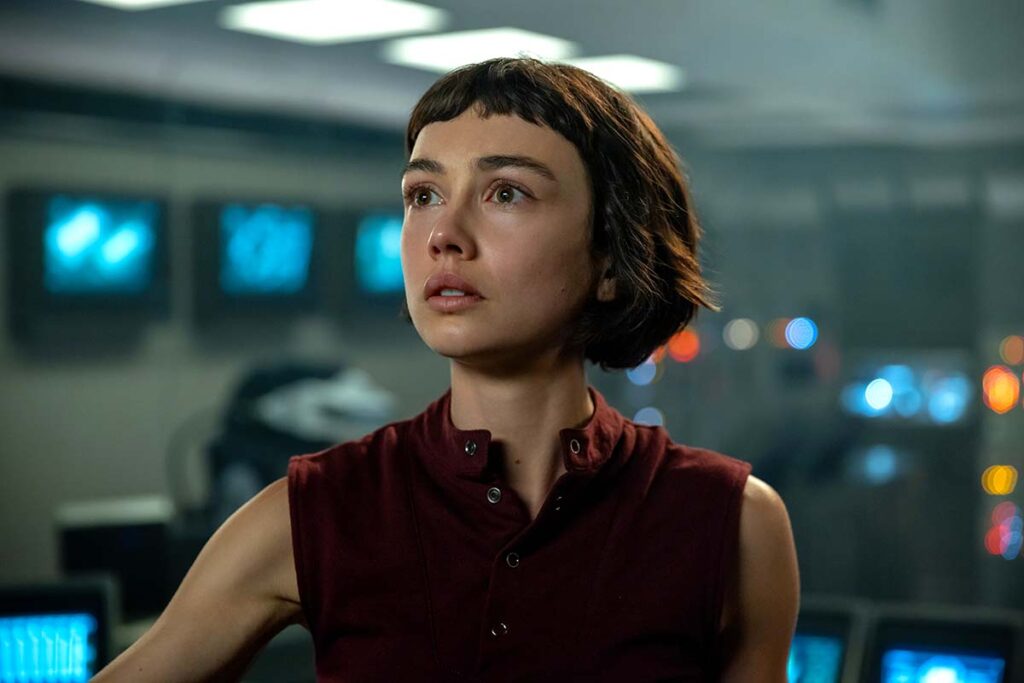
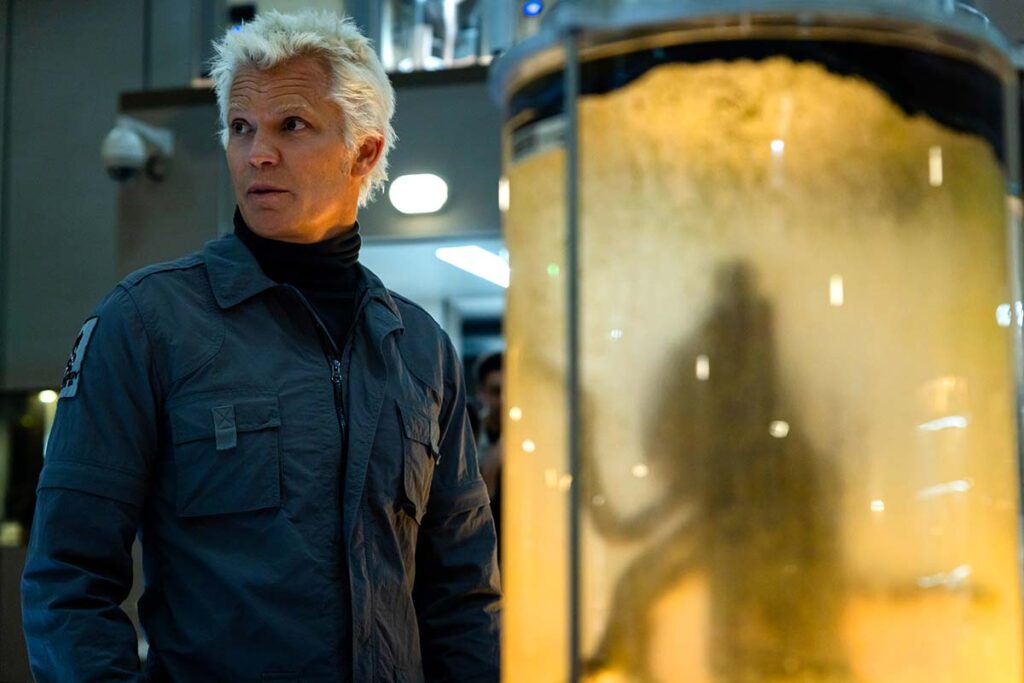
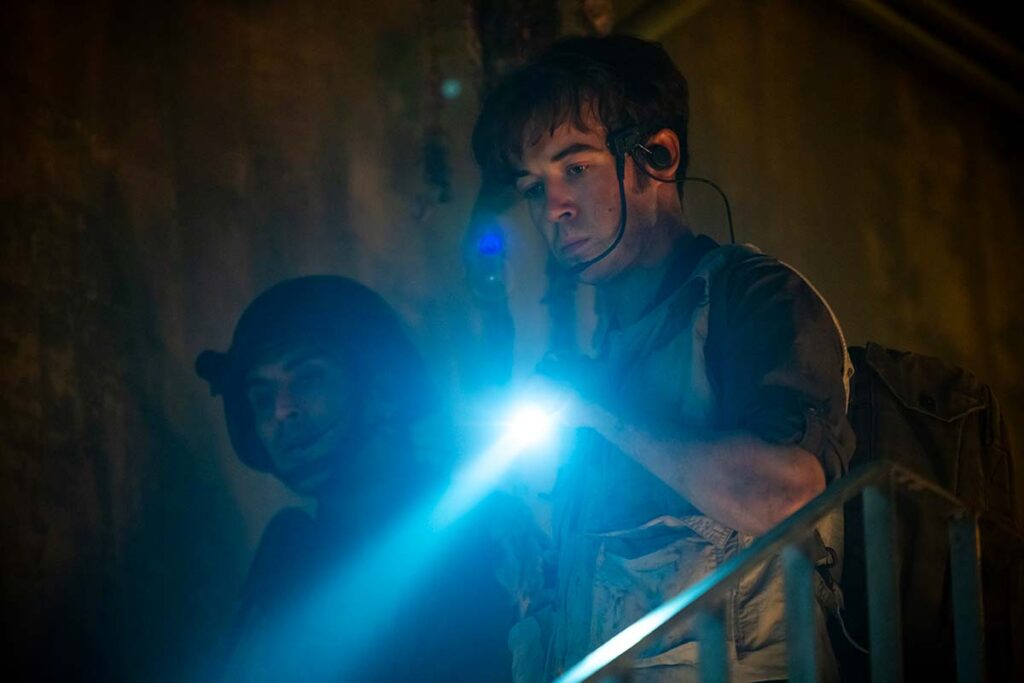
Created, written, and directed by Noah Hawley (“Fargo,” “Legion”), “Alien: Earth” stars Sydney Chandler as Wendy, the first hybrid prototype; Alex Lawther as Hermit, Wendy’s brother, a tactical officer and medic; Timothy Olyphant as Kirsh, a Prodigy synthetic and right-hand man to Boy Kavelier; Babou Ceesay as Morrow, a Weyland-Yutani ship Chief Security Officer; and Essie Davis as Dame Sylvia, a scientist playing a motherly emotional role to the newly “born” hybrids.
During a press conference in late July, Hawley and the cast spoke about creating the first “Alien” story for serialized TV, how they approached the franchise’s mix of horror and philosophy, and what fans can expect from the expanded universe. Here are some highlights.
How Hawley found his way into the series and why he incorporated a Peter Pan theme into the series.
It started with raising kids in a world where the natural world is starting to turn on us, and the technology we’ve created might turn on us as well. When asked if I had any ideas for “Alien,” I thought that’s what “Alien” is about—it’s about the primordial monsters of our past trying to kill Sigourney Weaver, and the A.I. future that’s also trying to kill her. Humanity is trapped between the A.I. future and the monsters of the past. Once I started with the idea of bringing children into the story—human minds transferred into synthetic bodies—the Peter Pan analogy came quickly.
Balancing new ideas—like hybrids and a corporately controlled Earth—with the tone and timeline of “Alien.”
An “Alien” movie is a two-hour survival story. A television show is long-form, where you have to invest in many characters who don’t die and explore the themes introduced in the franchise. The challenge was to take the monsters out of it momentarily and ask, “Where’s the drama we’re investing in week to week?” I’m not worried about the monsters—when we put them in, that’s the money-back guarantee. We had to create human drama, with many human monsters as well, and explore issues about our world projected into the future.
Exploring capitalism and corporate power in “Alien: Earth.”
So much of what defines “Alien” and “Aliens” is the nameless, faceless Weyland-Yutani corporation, and individuals—space truckers or soldiers—are at its mercy. In our day and age, corporations have faces: young technocrats, celebrity CEO billionaires. It wouldn’t have felt right if I had done the 1970s version of capitalism. Once the Peter Pan analogy emerged, it became clear that the CEO who invents hybrid technology should be the Peter Pan character—Boy Kavalier. In the earlier films, people felt they were at the whim of the larger corporation; here, it’s the whim of Boy Kavalier from moment to moment. “Let’s send these billion-dollar prototypes to a crash site. That sounds like a good idea, right?” So, we’re in a different state where the individual is at the mercy now, not just of this nameless, faceless corporation, but of these boy geniuses.
Why sci-fi stories endure.
If you asked the people who created the technology we’re using now, they were the sci-fi nerds of their high school. The job of fiction and sci-fi writers is to project a future we can accomplish over time. The tone changes—sometimes it’s dystopian, occasionally hopeful. You have “2001: A Space Odyssey,” then “Star Wars,” then “Alien.” “Star Wars” looks up, “Alien” looks down. My responsibility in bringing “Alien” to the small screen is to create a vision of the future where the characters work through what it means to be human and whether humanity can survive its own sins—maybe bringing some optimism to the world.
Differentiating Timothy Olyphant’s character from past synthetics in the franchise.
We talked about the programming that goes into Kirsh—maybe he’s not only programmed not to harm his boss, but also discouraged from disagreeing, and getting angry is verboten. If you don’t see eye-to-eye with him, maybe he just gives you a little smile that says “f— you” with his eyes.
On whether cats, sheep, or Hawley’s own child were harmed in the making of the show.
For the record, no cats were harmed—there was no real cat we did any damage to, only virtual. The sheep was also not harmed—there was an animatronic sheep, a virtual sheep. I misheard the advice “never work with children or animals” as “always work with children and animals,” and that’s what I’ve been doing. My son asked to play a role, and while he didn’t fit any of the Lost Boys, I thought a little Hermit–Wendy flashback would work. I’m always looking for efficiency, so rather than hire a day player to improvise with him, I just played his dad in the show as in real life.
The hardest part of making the series.
For me, the hardest part is being away from my family for three months at a time. There’s a trade-off to filming in Bangkok at this scale. The job itself is fun—we have a great team I can rely on, including everyone in the room—and I went home every day excited for the next.
Creating new creatures for the “Alien” universe.
If my job is to render the emotional experience of watching “Alien” into a television show, one critical feeling is discovering the Xenomorph’s life cycle—four monsters in one, each worse than the last. That discovery process is gone after seven movies. If I introduce new creatures whose reproduction or diet is unknown, you feel dread whenever they’re on screen or even just out there somewhere. It was function over form: what function do they serve in the story? Then I tried to gross myself out as much as possible. The design process with Wētā gave actors a real sense of what they were acting against, so the audience gets that original “Alien” feeling back.
Addressing comparisons to “Blade Runner.”
Ridley made “Alien” and then “Blade Runner,” so comparisons happen. By exploring synthetic beings in “Alien,” I’m not trying to make “Blade Runner.” Aesthetically, you might think Earth in “Alien” could look like “Blade Runner,” but I told the department heads, “If you find yourself making ‘Blade Runner,’ you’re making the wrong Ridley Scott movie.”
Conversations with Ridley Scott during development.
I started talking to Sir Ridley early. I had thought through an idea I wanted to explore, but wanted to hear his experiences on the first film and his thinking going into “Prometheus” and “Covenant.” Whenever I spoke to him, he was storyboarding what felt like a different movie. In the time it took to make one television season, he made three or four huge films. Once he realized he didn’t have responsibilities on this show, he moved on to the next thing. We spoke occasionally, but mostly I was on my own runway and he was on his.
Why Wendy’s childlike perspective is central to the story.
At the heart of “Alien” is humanity trapped between nature and technology, both trying to kill us. In the films, the question is whether two or three people can survive. In the show, it’s whether humanity can survive—and do we deserve to? The best way to explore that is to see the adult world through a child’s eyes. Children are bad liars; they don’t pretend they’re not scared, and they don’t accept things adults take for granted. Going through Wendy and the Lost Boys allowed that pure decency to confront the complacency and evils of the adult world.
What Hawley hopes audiences take away.
What drew me to this is the ambition for the genre to be bigger than just entertainment. I want it to be a fun show with action and horror, but I think science fiction has a responsibility to look at the issues we’re wrestling with on Earth and envision a future where we can solve them. My hope is that people ride the roller coaster episode to episode, and still think about and talk about the show afterward.
The first two episodes of “Alien: Earth” are available now on Hulu.

Rodrigo Perez is the founder and editor-in-chief of The Playlist, which he launched in 2008. He has worked in entertainment journalism since 2000, including at MTV, and has written for SPIN, IndieWire, Pitchfork, Complex, Magnet, and various music, film, and entertainment publications over the past two decades.

