


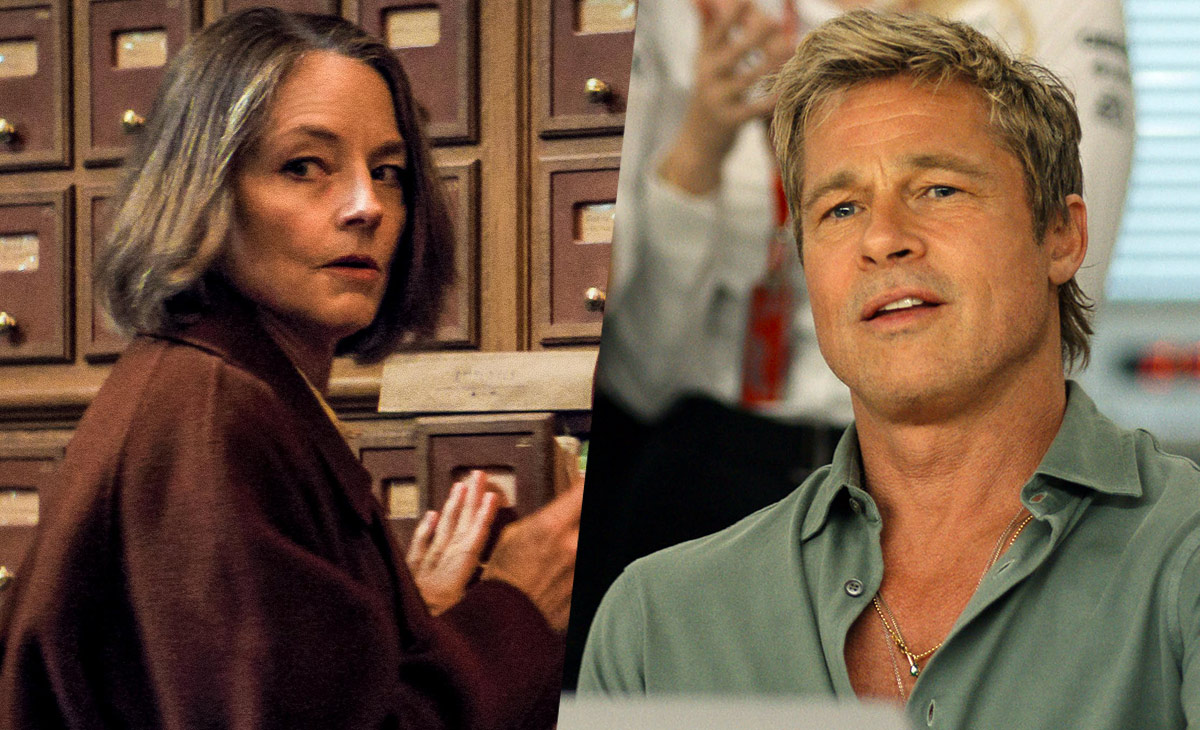
Jodie Foster has never seemed especially interested in sanding down her opinions for public consumption, and during a recent Aspen Ideas Festival conversation about Hollywood’s future, the candid actress had a sharp read on one of last year’s biggest studio success stories: “F1” (read our review).
Speaking during the session “Who Owns the Future of Hollywood?” with former Sony Pictures chief Michael Lynton, Foster used Apple Original Films and Warner Bros.’ Brad Pitt racing blockbuster as an example of a movie that, in her view, felt almost too machine-tooled in its construction.
READ MORE: The Best Films Of 2026 (So Far)
“I don’t say this disparagingly — how could I?” Foster said, according to Variety, noting that the movie made millions of dollars. “But I look at a movie like ‘F1,’ and I’m like, ‘F1’ was made by AI.”
She added, “Wasn’t it?” before clarifying that her point was less about accusing the film of literally being generated by artificial intelligence and more about how neatly it appeared to follow blockbuster screenwriting conventions. Foster said the structure felt like “exactly the structure that you would learn in school.” She also suggested that the dialogue and performances seemed overly calibrated to land precisely where a computer might determine they should.
That’s a pretty brutal assessment of a film that was otherwise widely embraced as a practical-effects-driven, old-school theatrical spectacle — and one that the industry rewarded, too. “F1” earned four Oscar nominations, including Best Picture, Film Editing, Visual Effects, and Sound, winning the latter category. Directed by Joseph Kosinski from a screenplay by Ehren Kruger, “F1” starred Brad Pitt as a veteran Formula One driver pulled back into the sport to help mentor a younger teammate, played by Damson Idris. Kerry Condon, Javier Bardem, Tobias Menzies, and Kim Bodnia co-starred, with seven-time Formula One champion Lewis Hamilton among the producers.
It was also a huge win for Apple. “F1” became a major theatrical success, earned four Oscar nominations — Best Picture, Film Editing, Visual Effects, and Sound — and won Best Sound.
So Foster is arguing against a pretty big mountain of evidence. Audiences showed up, critics mostly responded, and the Academy rewarded it. And to be fair, the movie is entertaining.
But that’s also what makes Foster’s comment sting. She’s not saying the machine failed. She’s saying it worked exactly as designed: a polished, muscular, crowd-pleasing blockbuster that still felt, to her, a little too slick, and maybe more than a little formulaic.


