



Academy Award-winning filmmaker Steven Soderbergh has never run from new technology. Quite the opposite, in fact. From early use of Avid digital editing and consumer DV cameras to the RED ONE digital camera, iPhone filmmaking, and app-based interactive storytelling, he has repeatedly treated emerging tools as part of the job rather than a threat to it. So, on some level, it should not shock anyone that he is now experimenting with generative AI.
The response, however, has been rough. Soderbergh’s new “John Lennon: The Last Interview,” which premieres at Cannes this month, uses AI-generated imagery around John Lennon and Yoko Ono’s final interview, recorded on December 8, 1980, hours before Lennon was killed. And in a new Deadline interview, Soderbergh defended the choice while drawing a line between visible, disclosed AI use and any attempt to mislead an audience.
He is also looking at the technology again for a very different project: a Spanish-American War film starring Wagner Moura. One film is built around an intimate final interview. The other would require ocean battles, period ships, and the kind of historical scale Soderbergh says he cannot afford through conventional means. In both cases, he framed the question around use and intent: when does AI solve a visual problem, and when does it violate the material?

On the Lennon film, Soderbergh said the immediate suspicion was that he had crossed the most obvious ethical line.
“I think people, when they heard about this project and that I was using AI tech, jumped to the absolute worst conclusion, which is, ‘He’s going to try and bring John Lennon back to life,’” Soderbergh said. “And all I can say is, have we met? Do I look like somebody that would do that? So it’s a little hard to talk about also because I feel once you’ve seen the movie, you go, ‘Oh, of course.’”
His defense is that intent and disclosure matter. Soderbergh said the Lennon doc uses AI in an obviously artificial, illustrative way—not to pass off a synthetic image as historical footage or resurrect Lennon.

“There’s a way of using AI in which your intention is to fool somebody or manipulate them, to create an image that you want them to think is real,” he said. “And then there’s a use, which is what we’re doing in the documentary, where it’s obvious that it is AI and that it is being used essentially in the way that you would use VFX or CGI or any sort of non-photographic technology.”
The example he gave is specific: an AI-generated sequence of babies dressed in 1960s clothes, designed to illustrate something Lennon discusses in the interview.
“It’s a way of comically illustrating something that John is talking about,” Soderbergh said. “You can’t shoot that. And even if you did somehow—you came up with some justification for shooting a bunch of one-year-old babies dressed in tie-dye outfits, crying their eyes out—even if you did it, if people knew it was real, it wouldn’t be funny.”
Soderbergh didn’t claim the technology is neutral, explaining the film’s use depends on the audience understanding that what they are seeing is not archival, not documentary evidence, and not a fake Lennon. For a nonfiction film built around a person’s last day, that transparency is critical.
Soderbergh said he also spoke to Sean Lennon about whether his father would have been curious about the technology.
“I asked Sean, ‘What do you think your dad’s take on this tech would’ve been?’ And he said, ‘Oh, he would’ve wanted to engage,’” Soderbergh said. “He loved all new technology. All The Beatles did. He would want to play with it just to see what it could do. He goes, ‘That was the way he was.’ How he would’ve felt about it ultimately, we’ll never know, but he said he would’ve wanted to play with it.”
Still, the filmmaker’s central justification is not hypothetical approval from Lennon. It is his obligation to the film itself and to the people involved.
“My moral obligation to myself and to Sean and Yoko and to the audience is the best version of this film, period,” Soderbergh said. “And we were able—luckily, through good timing—to get our hands on some tools that I know resulted in the best version of this film.”
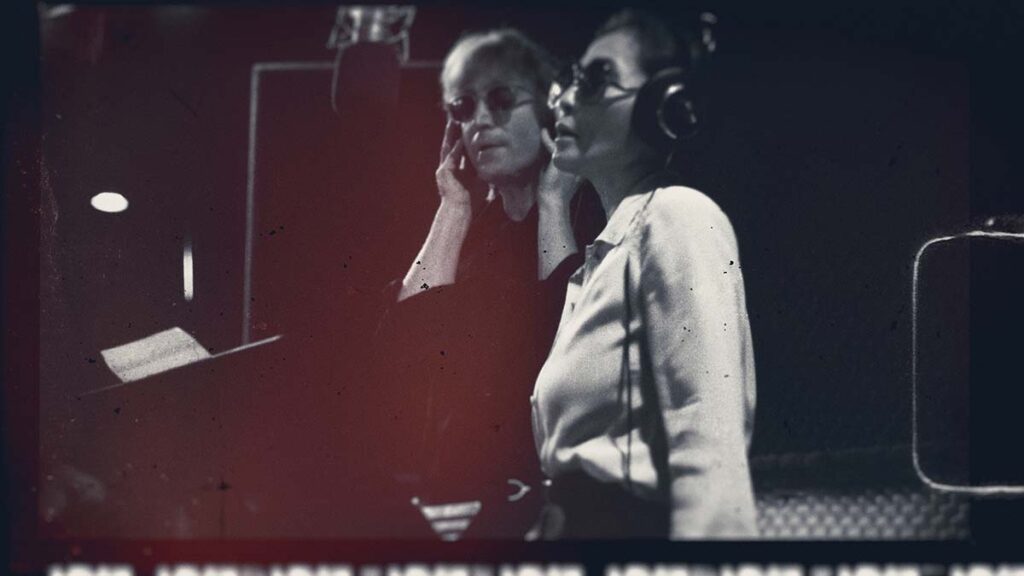
Separate from the AI debate, Soderbergh said he was struck by Lennon and Ono’s energy in the interview, saying he was surprised by “how excited they were to talk about everything and anything.” He added, “You’d think listening to them that they’d never been interviewed before. They had like no filter at all.”
The Lennon film is one side of Soderbergh’s argument. The Spanish-American War movie is the other. There, the filmmaker is talking about scale: the ability to stage 1898 naval battles without burying the movie under the cost of traditional visual effects.
“I’ve got ocean battles with scores of warships from 1898: I can’t afford that,” Soderbergh said. “I can build the deck, but I mean, I’ve got to have a plan here. But I think that’s different. People looking at that and knowing that that’s a visual effect is different than, as I say, a dinner table scene.”
Soderbergh appears comfortable using AI for imagery audiences already understand as constructed—warships, ocean battles, impossible period logistics. He is far more skeptical about using it where human behavior and performance are the point.
“I guess I’m going on my instinctual sense of better,” he continued. “So, for instance, battle on the ocean in the Spanish-American War film: the options are traditional VFX, which can be expensive; miniatures, which are interesting, but when you use miniatures in water, usually not so great; or this new technology.”
The line he draws around actors is direct. “In almost all situations that involve performance, I’m at a loss to know how [AI is] better,” Soderbergh said. “I’m not talking about face replacement or anything like that; I’m just talking about scenes in which the performances are central and locations that, again, you’d spend a lot of time trying to recreate in a virtual space.”
His preference in those cases remains bluntly practical: go to the actual location, shoot the actors, and move on. “My attitude is, well, we can just go there and do the whole thing in four hours in the real place,” he said. “Why is this better? So I’m just going on my, I guess, gut reaction to what’s better and what feels right for the piece.”
Soderbergh’s stance on AI is neither a blanket endorsement nor a refusal. He is making a case for limited, visible, disclosed use; whether audiences accept that remains open.
“Here’s the other thing that I think we’re all waiting to see, which is why I want people using this technology, so we can answer this question,” he said. “Because it’s a big question: Is there, and will there be, a basic sort of allergic reaction on the part of the audiences for material that is, for all intents and purposes, supposed to be ‘real,’ that they know has been generated by AI? Are they going to have a human reaction that basically just leads them to go, ‘Yeah, I’m just not vibing with that’? I don’t know the answer; I want to know.”
“John Lennon: The Last Interview” premieres at Cannes this month and is still looking for distribution. The Spanish-American War film remains in development, but together, the two projects show where Soderbergh is drawing the line: AI as a tool for surreal documentary illustration and historical spectacle, not as a replacement for actors, authorship, or human presence.

Edward Davis is a senior film journalist and longtime contributor to The Playlist. Davis covers the full breadth of cinema — from major studio releases to independent and international film.


