


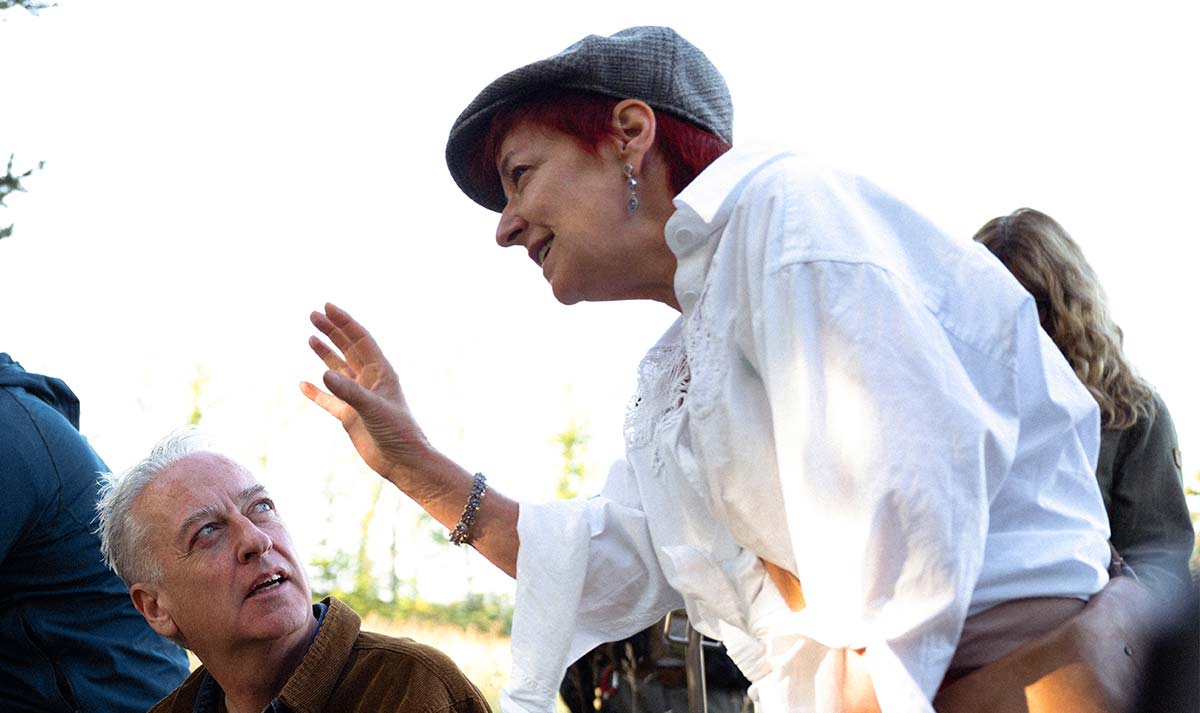
For acclaimed Scottish filmmaker Lynne Ramsay — known for “You Were Never Really Here,” “We Need to Talk About Kevin,” “Morvern Callar,” and “Ratcatcher,” — the years between releases aren’t about lack of direction; they’re about the complex reality of mounting films that are almost impossible to execute. While discussing “Die My Love,” her new, sometimes comedic and sometimes disturbing psychodrama starring Jennifer Lawrence and Robert Pattinson, the filmmaker opened up frankly about the long pauses in her career and why some projects simply refuse to move. “Yes, it’s challenging,” she said about getting a movie made in the current industry climate. “And COVID-19 made it even more difficult.”
Her largest roadblock remains “Polaris,” the Arctic-set original film she developed for Joaquin Phoenix and Rooney Mara. Ramsay described the scale of the undertaking with a bluntness few directors admit publicly. “I had a very ambitious project involving a boat going to the Arctic. I didn’t realize you need to book a boat a year in advance,” she said. What began as a visionary expedition rapidly ran into global shutdowns, unavailable vessels, and industry-wide stoppages. “The logistics became impossible. COVID disrupted everything, and then the writer’s strike added more delays. You go through stretches of bad luck.”
The compressed, insulated production of “Die My Love” — filmed inside a single house with Jennifer Lawrence and Robert Pattinson — offered Ramsay something she hasn’t experienced in years: speed. “Smaller, contained films are easier to make,” she said. “This one was contained — one house, two actors — so it moved faster. Between the script and production was only a year. But big, ambitious films take more time.”
Still, “Polaris” remains a passion project. “It’s an original script that I really love,” Ramsay said. “It’s unusual, cold, and atmospheric.” She recalled showing it to Jonny Greenwood, whose immediate response validated the script’s sensory power: “He read it and said he could feel the cold.” But the combination of Alaska, winter, and period-specific details continues to complicate the film’s path to production.
The same barriers apply to “Stone Mattress,” her long-planned adaptation of Margaret Atwood’s short story. “It’s a fantastic short story adaptation, but again, it involves the Arctic and Greenland, which complicates production,” Ramsay said. “We’re trying to get one of them moving. COVID at least gave me time to write, so they still exist and could happen.”
Ramsay has also not abandoned her long-gestating project, inspired by the themes of Moby-Dick. “Years ago, I cut a little trailer for myself,” she said. “It wasn’t about a monster — it was inspired by the big themes.” Even so, she’s realistic about its scale. “It’s ambitious, and ambition is difficult to fund right now. Smaller films are easier to make. I would love to make these larger, more challenging pieces, but timing and logistics matter. You need the right circumstances.”
Ramsay views these projects not as abandoned but as suspended, hovering until the right combination of timing, funding, and logistics aligns. She’s holding onto them with a mix of persistence and pragmatism — continuing to refine, revisit, and reshape the scripts so they’re ready the moment circumstances shift. None of them, she emphasized, is off the table; they’re simply waiting for the moment when the industry conditions match their ambition. “Die My Love” is in theaters now via Mubi. — Additional reporting by Rodrigo Perez.

Edward Davis is a senior film journalist and longtime contributor to The Playlist. Davis covers the full breadth of cinema — from major studio releases to independent and international film.


