


“What a terrible time to have eyes,” one YouTube user lamented. And with that, if the pitch for Darren Aronofsky’s “On This Day… 1776” is meant to sound like a classy collision of history, craft, and new tools, the early reception has landed closer to riot. A new trailer for the short-form animated series—an American Revolution project released through TIME Studios and produced by Aronofsky’s AI venture Primordial Soup—has triggered a loud and unusually personal wave of disappointment, with critics and creators framing it less as an experiment and more as an auteur crossing a line.
According to TIME’s press release, “On This Day… 1776” will roll out weekly throughout 2026 on TIME’s YouTube channel, with each episode timed to the 250th anniversary date of the event it depicts; the series is “made in part” with AI from Google DeepMind, “made possible” with support from Salesforce, and features SAG-AFTRA voice actors, a score by Jordan Dykstra, and a writers’ room led by Lucas Sussman (with post handled by a human post team).
READ MORE: Darren Aronofsky Explains Biblical & Environmental Messages In ‘Mother!’
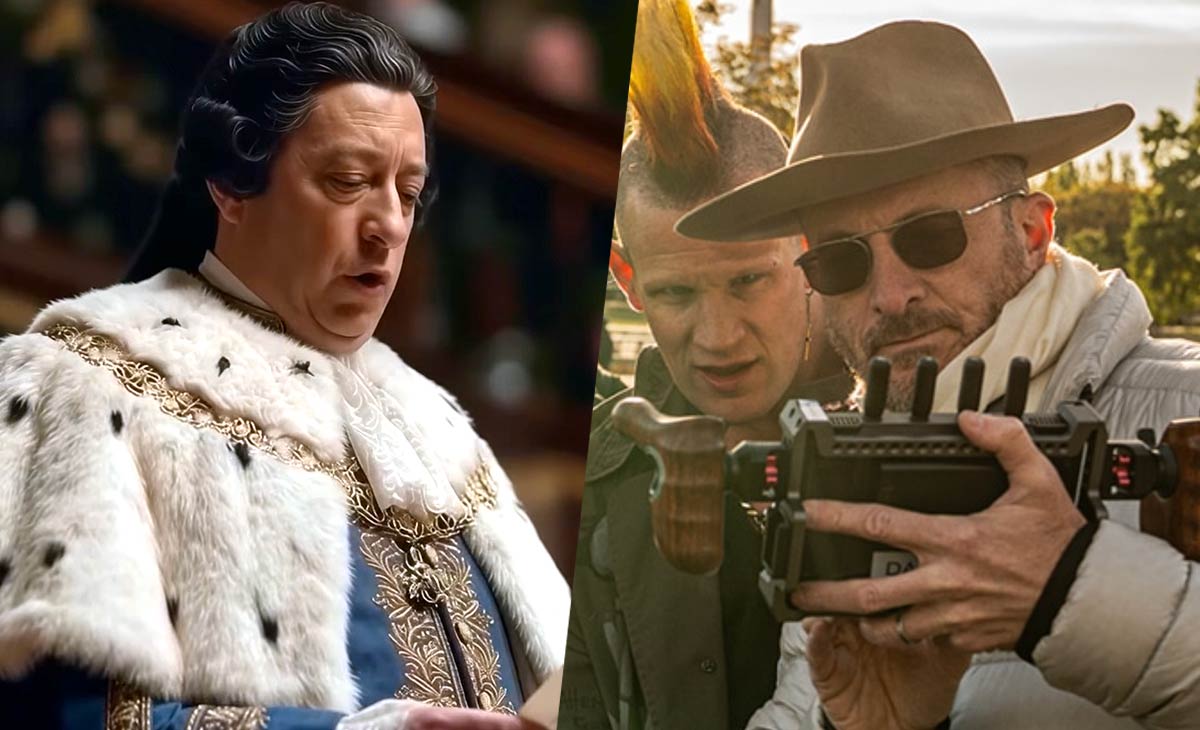
But the discourse hasn’t been about workflow credits so much as a gut-level reaction to the result—and, crucially, who’s fronting it. Writer-producer Steven S. DeKnight, creator of STARZ’s “Spartacus” franchise and the showrunner of Netflix’s “Daredevil” on season one, went straight for the jugular in a post reacting to the trailer, calling it, “A complete betrayal of cinema.” Comics writer Joshua Dysart drew a contrast with traditional craft (and compensation), writing, “Ken Burns … released a 720-minute exploration … using zero generative AI,” while pointing readers toward the still-very-human alternative. And film pundit Grace Randolph framed the move as self-own revolutionary cosplay, writing, “Ironic to see Aronofsky make an AI movie about Revolution and—by the act itself—be a Benedict Arnold.” Even in a media landscape where AI blowups have become distressingly routine, there’s something about an Oscar-nominated filmmaker putting his name (and new company) on the masthead that’s made the anger feel less like a tech argument and more like a betrayal narrative.
The complaints themselves are not especially mysterious. Multiple outlets and commenters have zeroed in on the now-familiar generative tells: uncanny faces, floaty movement, and a slippery sense that the images are “close enough” to resemble cinema, while still refusing to behave like it. The A.V. Club described “repetitive camera movements” and “waxen characters,” while also noting the project’s insistence on human voice casting as part of its “ethical” framing. PC Gamer was even more explicit about the aesthetic nausea—arguing the constant swoops and zooms feel like motion for motion’s sake—and points to basic visual failures (including garbled lettering on the “Common Sense” cover that morphs into nonsense) as the kind of detail collapse audiences clock immediately. Futurism highlights similar issues and quotes historian Mateusz Fafinski, spotting the teaser’s mangled “Common Sense” text and deadpanning, “Happy to see that there is no need to worry about the historical accuracy of new 1776 AI slop because it happens in the mystical land of Λamereedd.” Playwright Ashley Naftule summed up the darker side of the pile-on—less “debate,” more grim satisfaction—quipping, “As a lifelong Aronofsky skeptic, I’m feeling insanely vindicated right now.”
On the other side of the push-and-pull is TIME’s stated case for the project: a version of “artist-led” AI that’s framed as an expansion of possibility rather than a replacement of labor. Ben Bitonti, TIME Studios president, positions the series as proof-of-concept for how the tech might be used without erasing the human pipeline, saying, “This project is a glimpse at what thoughtful, creative, artist-led use of AI can look like—not replacing craft, but expanding what’s possible and allowing storytellers to go places they simply couldn’t before.”
And yes, the tonal irony is baked into the reaction: Aronofsky has, for years, positioned himself publicly as environmentally minded—two of his most overt allegories, “Noah” and “Mother!,” are frequently read through that lens—but he’s also attached his name to real-world green causes: he joined the Sierra Club Foundation’s board of directors in 2016, with that announcement noting his involvement around fights like Keystone XL, the People’s Climate March, and “Shell No Arctic,” he’s a trustee of The School for Field Studies (the environmental study program he attended as a teenager), he’s participated in Sierra Club-linked trips meant to spotlight the Alberta tar sands and the Arctic National Wildlife Refuge, and he even collaborated with artist JR on the COP21-era climate artwork “The Standing March.”
He’s even said, “Outside of my film work, all my work is environmental work.” So it’s not surprising some viewers are side-eyeing the optics of an AI-forward venture at a moment when researchers and journalists have been warning that generative AI’s boom is inseparable from a data-center buildout with real energy and water costs (especially for cooling), even as the exact footprint varies widely by model, hardware, and where those facilities sit on the grid.
To be fair, TIME Studios’ leadership is explicitly framing this as “artist-led” experimentation rather than replacement. After noting the series is “historically grounded,” Ben Bitonti positioned it as an expansion of craft: “This project is a glimpse at what thoughtful, creative, artist-led use of AI can look like—not replacing craft, but expanding what’s possible.” But the early consensus among detractors is that the trailer—and the initial episodes—function less like a proof-of-concept for a brave new medium than an argument for why the medium still isn’t ready (and why many don’t want it “ready” on these terms). For now, new episodes will continue to arrive weekly through the year on TIME’s YouTube channel, and the discourse will likely keep pace right alongside them.
Pass on this and everything Aaronfsky does in the future. A complete betrayal of cinema. https://t.co/oAphNHAJmn
— Steven DeKnight (@stevendeknight) January 30, 2026

Edward Davis is a senior film journalist and longtime contributor to The Playlist. Davis covers the full breadth of cinema — from major studio releases to independent and international film.


