


For a franchise that’s spent the last decade ricocheting between mythic crowd-pleasers and behind-the-scenes problems, the most revealing part of Kathleen Kennedy’s Lucasfilm exit media tour this week isn’t release-date teases or a new “Star Wars” trilogy promise—it’s the reminder that the job, at its core is stubbornly human. To that end, getting artists to believe they could walk into the most loaded sandbox in Hollywood and still leave fingerprints on the toys is harder than one might think.
Asked by Deadline about various filmmaker interests over the years and currently, they came up with a what-if scenario: what about a filmmaker like Ryan Coogler, the “Sinners” filmmaker, who is sure to earn himself another Oscar this year for his ambitious vampire-horror hybrid. But fans hoping for the “Black Panther” filmmaker to join that universe will likely be disappointed with that dream. “‘Star Wars’ isn’t really Ryan’s thing,” she said, underscoring the great problem with “Star Wars”: finding a director who can enter the galaxy far, far away and remain themselves as a storyteller.
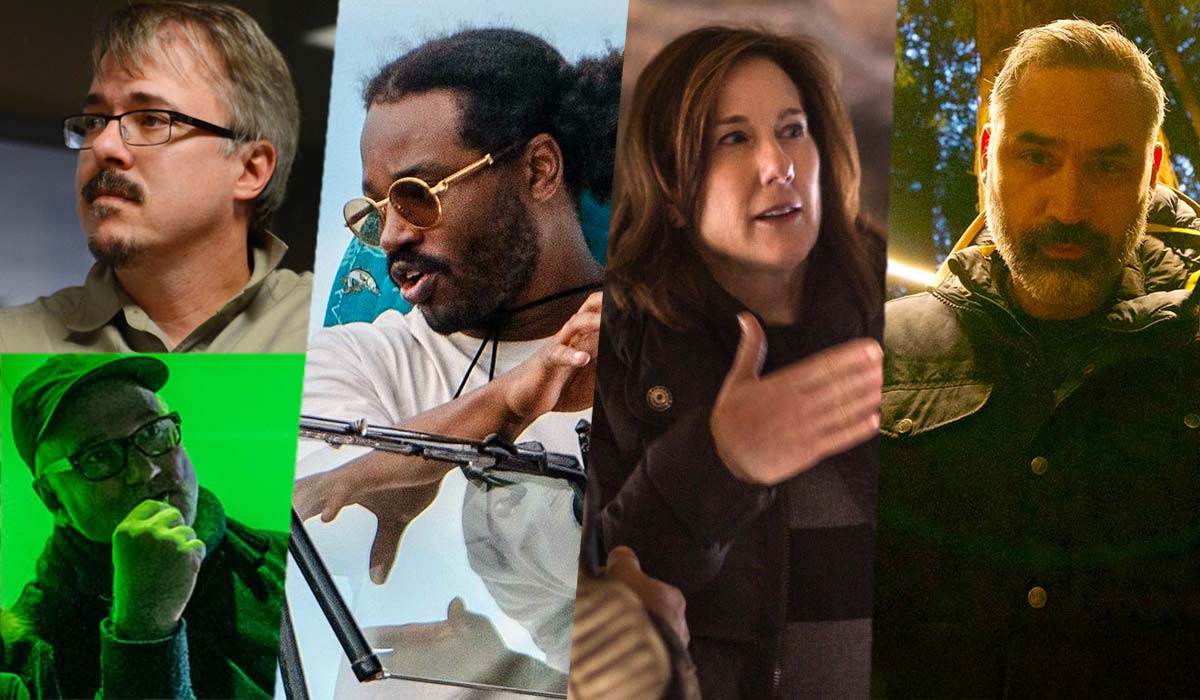
That’s where her answer got kind of spicy. Because while she put the brakes on the Coogler notion, she also name-checked a list that reads like alternate-universe development slates: David Fincher, Vince Gilligan (specifically for TV), and Alex Garland—all people she said she’d spoken with in some capacity while trying to chase a version of “Star Wars” that felt genuinely different.
Garland and Gilligan are new names that have never been mentioned before. The Fincher name drop, however, it should be stressed, wasn’t some new round of courting—it was old business from the early, post-Disney days when Lucasfilm was effectively starting over and taking meetings all over town to see who might have a left-field take on “Star Wars.” Fincher met with Kennedy during that initial sweep, stayed cordial (he’s had long-standing ties in the Lucasfilm orbit), and ultimately declined—something he’s spoken about publicly in the years since.
Kennedy’s larger point was that the “no’s” and “not my thing’s” aren’t necessarily always permanent—sometimes they were just the opening position before someone found an angle. She pointed to Tony Gilroy as her favorite example of the slow conversion. She knew him from the “The Bourne Identity” films (her husband, Frank Marshall, produced them), and he didn’t initially see himself in the “Star Wars” universe; she essentially kept the conversation alive until it clicked. That arc ran through his work on “Rogue One”—he was hired to rewrite the script and take over directing duties midway through the production— and eventually into the acclaimed spin-off series he created “Andor” which became the proof-of-concept for the idea that you didn’t need a director who arrived with a childhood shrine to make something sharp, adult, and personal inside the brand.
There’s also a blunt practicality embedded in her answer—one that tends to get lost when fandom talks about directors like they’re free agents in a fantasy draft. Even when a filmmaker is intrigued, these movies demand years of life, and the gravitational pull of the enterprise can flatten whatever made them interesting in the first place. Kennedy framed that push-pull as the true “trickiest thing,” not simply “getting someone,” but convincing them they could still be themselves when the machine is this big.
All of it landed in the context of the real-world changing of the guard: Disney announced this week that Kennedy was stepping down from running Lucasfilm, with Dave Filoni (“The Mandalorian,” “Ahsoka”) named president and chief creative officer and Lynwen Brennan becoming co-president, as Kennedy moved into a producing role. And whatever shape “Star Wars” takes next—more theatrical, more TV-forward, more Filoni-coded—Kennedy’s comments underscored what the last decade already taught: the franchise is at its best when it stops chasing “a Star Wars movie” and starts courting the rare filmmaker who can smuggle a point of view through the blast doors.


