


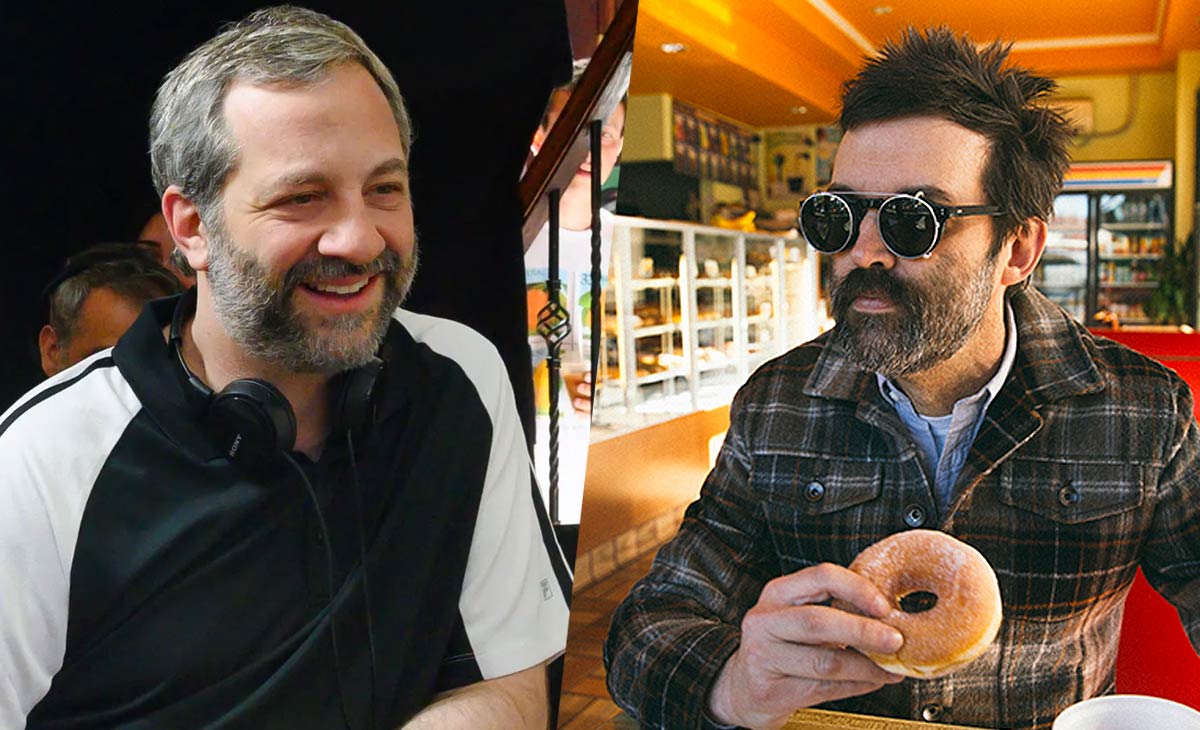
Known for decades as something like Hollywood’s mayor of comedy, Judd Apatow has spent the last several years widening that focus, turning increasingly toward documentaries about artists and creatives he admires. His latest subject —or at least the one he is helping shepherd into the world—is Mark Oliver Everett, the elusive, darkly funny, and deeply idiosyncratic musician better known as E, the frontman and guiding force behind the melancholy indie-rock band Eels. Apatow is producing “The Way I Was Made: The Story of a Man Called E,” a new documentary directed by Gus Black, a longtime collaborator of the band, which is currently in production.
The film will chart Everett’s life and career, from his upbringing in Virginia to his emergence as one of indie rock’s most singular voices, digging into the personal losses that shaped both the man and the music. Everett’s father died when he was young, and later tragedies—including the deaths of his sister and mother—became central to the emotional DNA of his work. That history isn’t just background; it’s the core of why Eels’ music has always carried a mix of dolor, odd humor, and fragile resilience.
Everett’s story has occasionally brushed the mainstream—Eels’ 1996 debut Beautiful Freak broke through in the alt-rock landscape—but his career has largely unfolded on its own terms, building a devoted following across more than a dozen albums that resist easy categorization. His songs are often deceptively simple, emotionally direct but never sentimental, and capable of shifting from bleak to strangely hopeful without warning.
Black’s involvement suggests a more embedded perspective than a standard cradle-to-grave documentary. As a director who has worked with Eels over the years, he brings proximity and familiarity, which could lend the film a more personal, less observational feel. Robert Schwartzman also produces, with Kevin Gasser serving as executive producer.
The project is being developed as a Utopia Original, with plans to incorporate previously unheard music, unseen performances, and rare archival material, alongside a broader look at Everett’s advocacy work around mental health and his decades-long efforts supporting Tourette’s and other neurological conditions through community outreach.
The material also fits into Apatow’s broader nonfiction run, which hasn’t just focused on comedy legends. Alongside documentaries like “The Zen Diaries of Garry Shandling,” “George Carlin’s American Dream,” and this year’s “Paralyzed by Hope: The Maria Bamford Story,” he also co-directed the music documentary “May It Last: A Portrait of the Avett Brothers,” which makes his move toward a film about Mark Oliver Everett feel less like a random detour than part of an expanding interest in artist portraits across mediums.
No release date has been announced yet. But with Apatow continuing his documentary run and Everett finally getting a feature-length portrait, “The Way I Was Made” has the makings of something closer to an artist study than a conventional music-doc retrospective—one built around a career that has always felt a little too strange and too personal to be easily summarized.


