


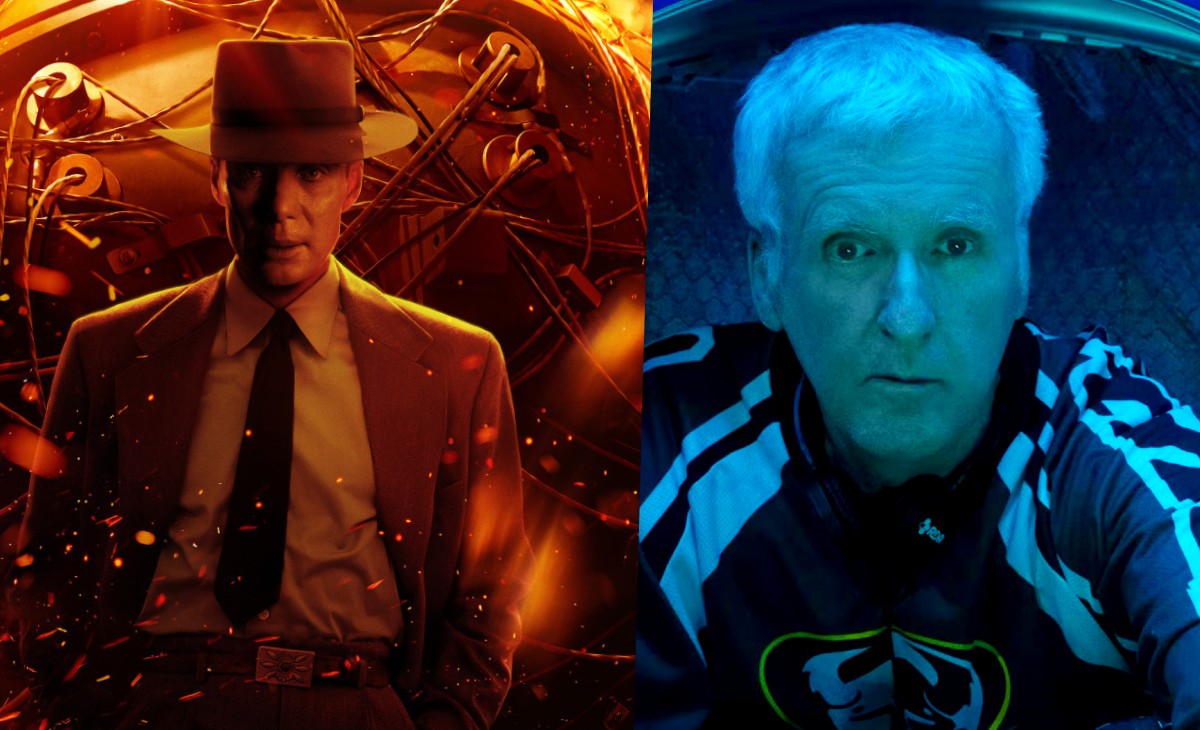
Canadian filmmaker James Cameron, who is gearing up to make his own atomic bomb drama feature with an adaptation of the Charles Pellegrino novel “Ghosts of Hiroshima,” is taking some shots at Christopher Nolan‘s Oscar-winning Robert J. Oppenheimer biopic “Oppenheimer.”
Telling Deadline in an interview published this week that the Nolan film is a “moral cop-out” for going out of its way to not fully show the true impact of the bombs on the Japanese cities and their perspectives, by dodging the subject with only brief references.
READ MORE: Summer 2025 Movie Preview: 50 Films To Watch
“Yeah…it’s interesting what he stayed away from. Look, I love the filmmaking, but I did feel that it was a bit of a moral cop out…Because it’s not like ‘Oppenheimer’ didn’t know the effects. He’s got one brief scene in the film where we see, and I don’t like to criticize another filmmaker’s film, but there’s only one brief moment where he sees some charred bodies in the audience, and then the film goes on to show how it deeply moved him. But I felt that it dodged the subject. I don’t know whether the studio or Chris felt that that was a third rail that they didn’t want to touch, but I want to go straight at the third rail. I’m just stupid that way,” Cameron said when the topic of “Oppenheimer” came up, and his dissatisfaction with how the Japanese point of view was limited.
Cameron, well-known for his bluntness and creating a sci-fi franchise warning of a global nuclear holocaust with “Terminator,” is tackling that exact subject as the book he’s adapting features the true story of Tsutomu Yamaguchi, who survived both atomic blasts from Hiroshima and Nagasaki unleashed by the U.S. military (Japan being the only nation to be the victim of a nuclear bomb, twice).
He believes that his feature adaptation could end up becoming his least successful movie at the box office, but Cameron is still hopeful he can make a movie as authentic as Steven Spielberg‘s horrific exploration of the true brutality U.S. military forces face during WWII in “Saving Private Ryan.” Spielberg didn’t go out of his way to temper down that opening D-Day sequence because he imagined audiences would be too squimish; he was trying to approximate how horrible warfare was using filmmaking techniques to be as truthful as possible.
“You’re dealing with something that’s on a whole other level. Look, this may be a movie that I make that makes the least of any movie I’ve ever made, because I’m not going to be sparing, I’m not going to be circumspect. I want to do for what happened at Hiroshima and Nagasaki, what Steven Spielberg did with the Holocaust and D-Day with ‘Saving Private Ryan.’ He showed it the way it happened. He and I talked about this, and he shared this with me. When he was making that film, notwithstanding whatever the studio wanted from it, he said, I’m going to make it as intense as I can make it, because my limitation as any filmmaker — and he’s the best out there — is that I can’t make it as intense as it really was. That was an object lesson. You’ve got to use everything at your cinematic disposal to show people what happened. We all love our horror movies, and horror movies love to outdo each other. This is true horror, because it happened.”
We should be aware that Cameron is entitled to an opinion (even if you don’t agree with it) and was directly asked about his thoughts on “Oppenheimer,” he wasn’t blindly taking pot-shots at Nolan or his movie. This is also a criticism that has lingered on beyond award season and doesn’t take anything away from the movie’s huge success, nearly earning a billion dollars at the global box office (a feat in itself for an R-rated biopic about atomic scientists) and landing an impressive string of Oscar statues such as Best Picture, Best Actor for Cillian Murphy, Best Supporting Actor for Robert Downey Jr., Best Director for Nolan, Best Original Score for Ludwig Göransson, and Best Cinematography for Hoyte Van Hoytema.

- Christopher Marc
- Christopher Marc
- Christopher Marc
- Christopher Marc
- Christopher Marc
- Christopher Marc
- Christopher Marc


