


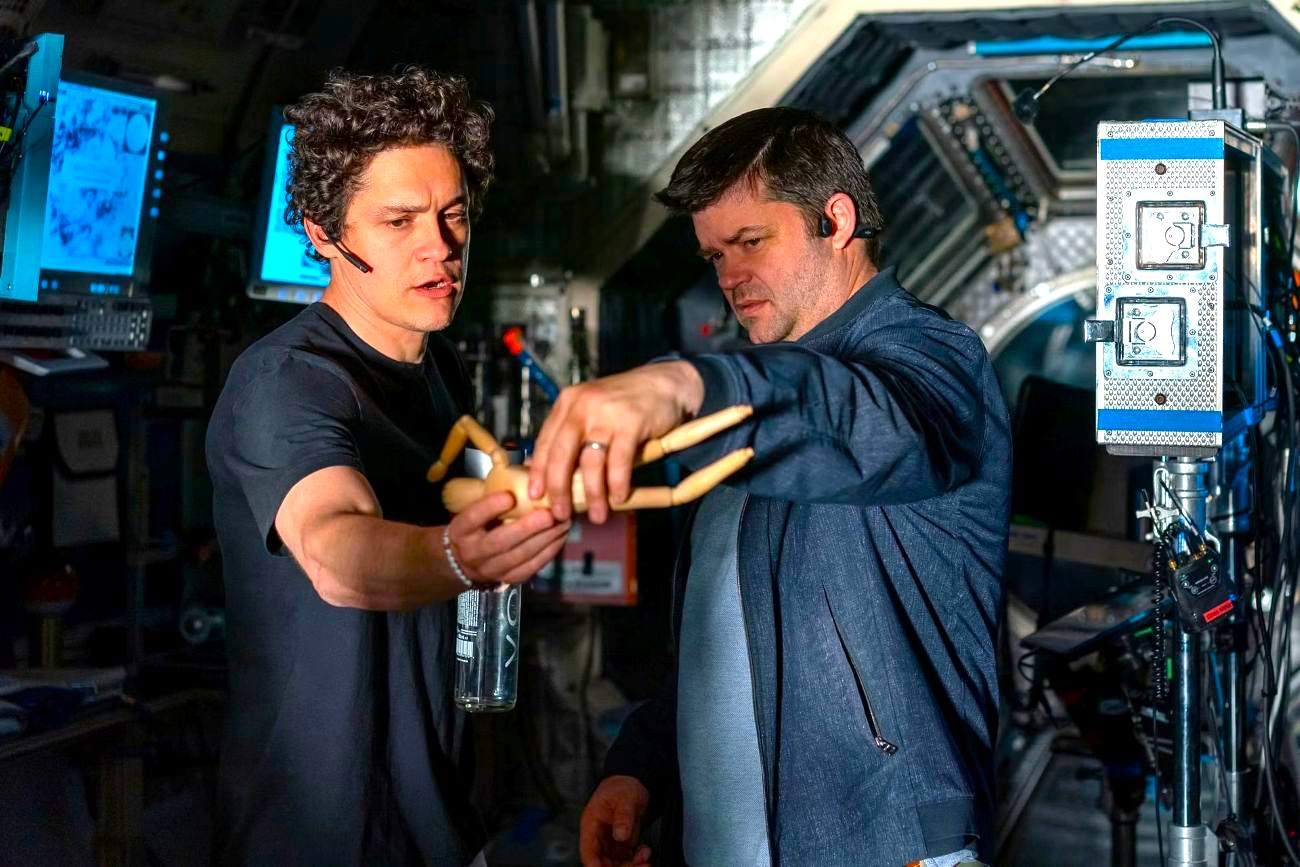
Later this month, we’ll see the release of Phil Lord and Christopher Miller‘s sci-fi comedy “Project Hail Mary,” a comedic outer space survival movie starring Ryan Gosling that is based on the novel by author Andy Weir and adapted for the screen by Drew Goddard (after previously turning Weir’s book “The Martian” into a script for Ridley Scott).
Lord and Miller, speaking with the folks over at ComicBook, have revealed that during the film’s production, they used “no green screen” on the VFX-heavy project (shot by Oscar-winning “Dune: Part One” cinematographer Greig Fraser) by opting to do as much detailed set and practical visual effects work as possible.
READ MORE: 13 March Films To Watch: ‘Project Hail Mary,’ ‘Peaky Blinders,’ ‘Hoppers’ & ’The Bride!’
“I think the singular achievement has to be Rocky,” said Lord of the creation of Gosling’s alien co-star. “Holistically, from his design that started before we even had a script to physically printing him out and painting him and having him move in ways that were expressive, and to the CG artists and animators that took the baton…and kept being expressive and bring their own personality to it. It’s emblematic of what happens [throughout] the whole movie.”
Miller chiming in, “And what’s fun about the movie is there is no green screen in the movie whatsoever. Not a single green or blue screen was used. The whole ship was built as a set from the inside. We had a huge section of the exterior of the ship on the outside that we built. Rocky was really with us at all times. That’s what makes it feel real and makes it feel natural … and the way that [cinematographer] Greig’s [Fraser] team lit with a lot of practical lights allowed him to move the camera wherever and find these moments because we could see this thing that Rocky was doing and then move over to [Ryan Gosling’s character] Grace and see his reaction to what was really happening, and you weren’t just guessing and pointing out where Rocky might be some day. And that’s what makes it feel like it was captured in the moment.”
An impressive feat, while many massive studio films are going all-in digital sets and plug-in CGI sequences that end up over-tweaked/redone, adding to the workload of underpaid and overworked effects teams. Going for more practical effects means that sequences shot in-camera are also less likely to be replaced or reshot, which could be a reason why Lord/Miller decided to go that route after their experience working on “Solo: A Star Wars Story” (before being replaced with Ron Howard on pricey reshoots).
Ahead of the reviews for “Project Hail Mary,” the first reactions have been mostly positive, adding to the growing buzz surrounding the pic hitting screens on March 20.
Christopher Miller said there's no green screen used in Project Hail Mary
— ada (@leadaal) March 3, 2026
"What's fun about the movie is that there's no green screen in the movie whatsoever. There's not a single green or blue screen was used. The whole ship was built as a set from the inside… Rocky was… pic.twitter.com/5mZ0zksxAp

- Christopher Marc
- Christopher Marc
- Christopher Marc
- Christopher Marc
- Christopher Marc
- Christopher Marc
- Christopher Marc
- Christopher Marc


