


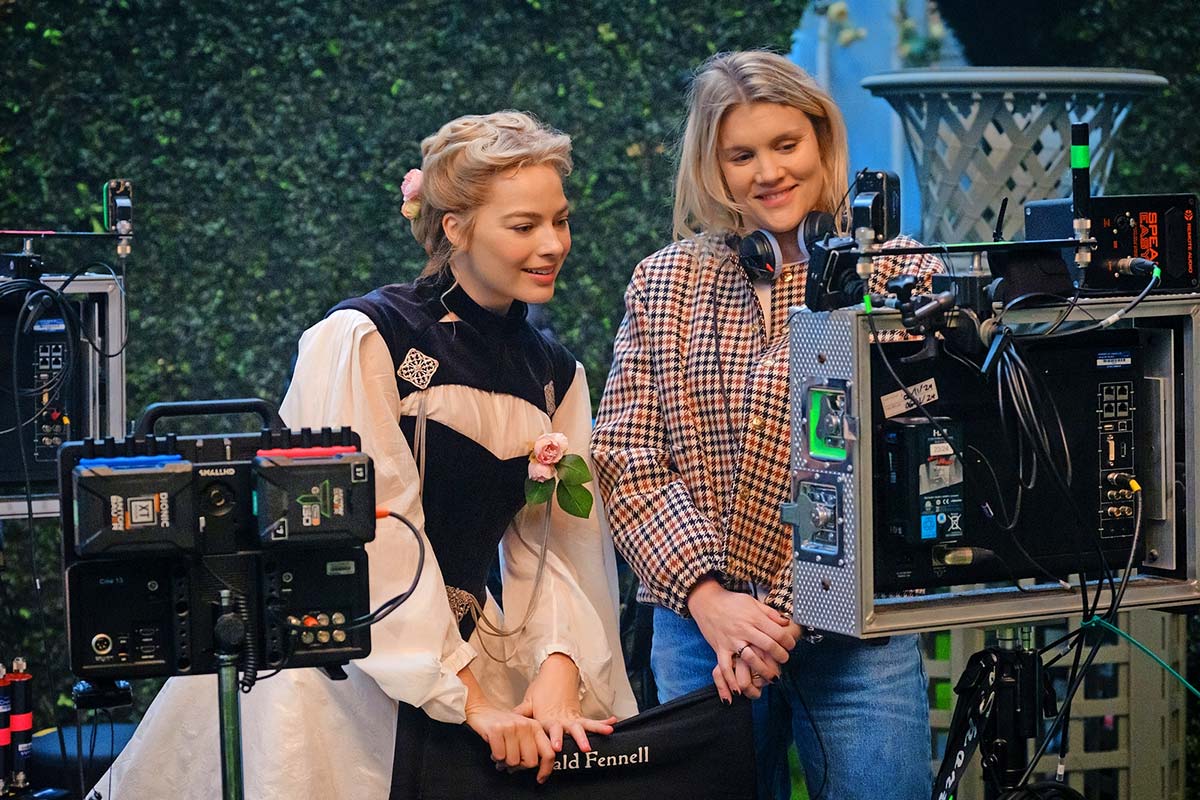
Emerald Fennell‘s new take on “Wuthering Heights,” starring Margot Robbie and Jacob Elordi as the yearning couple, has been drawing audiences over the Valentine’s Day weekend, earning $83 million globally ($34.8 million of that coming from domestic screenings). That is certainly strong success for the film, given the reported production budget being around $80 million. However, fans of the novel are noticing some jarring narrative choices made by Fennell, including primarily focusing on the first half of the book and nixing characters like Mr. Lockwood, alongside forgoing the ghost element, which she is now addressing.
The writer/director is now defending the changes she made from the original Emily Brontë for her latest take on the Gothic romance novel published back in 1847. Telling Entertainment Weekly that she ultimately had to make “hard decisions” when you’re dealing with a feature film runtime and not a series adaptation, where she could have gone deeper and kept most of the characters intact.
READ MORE: 14 Must-See February Films: ‘Wuthering Heights,’ ‘Pillion,’ ‘Crime 101’ & More
“It was funny, you know, I think the things that I remembered were both real and not real,” Fennell told EW. “So there was a certain amount of wish fulfillment in there, and there were whole characters that I’d sort of forgotten or consolidated. When you look at not just other movie adaptations of this, but Kate Bush‘s song, or Balthus‘ lithographs, or a lot of the kind of contemporary illustrations, most of them tend to focus on Cathy and Heathcliff. Because I think that’s really the moment that draws to an end in the book.”
“And I think, really, I would do a miniseries and encompass the whole thing over 10 hours, and it would be beautiful. But if you’re making a movie, and you’ve got to be fairly tight, you’ve got to make those kinds of hard decisions.”
Fannell also commented on not having Cathy (Robbie) return as a ghost after her death, a key element from the novel, “It begins where it ends and ends where it begins. And that’s the thing about love, and it’s the thing about the book, right? It’s that it’s forever and it’s cyclical, and so there’s no stop, even when there’s a terrible, sad, tragic stop, it’s not really a stop, because that’s what the book feels so much about…It’s about the depths of human feeling and how it exists in a profound way, not just a physical one. And so that, I don’t know, that felt like the right way to end it for me.”
Trying to trim down a story to be managable feature length runtime is certainly something screenwriters and directors have to navigate when adapting books to the big screen, as changes often happen for various creative reasons. Folks are going to have their opinions when a movie is based on such a popular story, but that doesn’t mean moviemakers are required to create new media that is exact one-to-one of the original source material.
Feel free to read The Playlist’s review of “Wuthering Heights” right here, as the buzzy film is currently in theaters.

- Christopher Marc
- Christopher Marc
- Christopher Marc
- Christopher Marc
- Christopher Marc
- Christopher Marc
- Christopher Marc


